We’re reader-supported. This means when you buy through links on our site, we may earn an affiliate commission.
Walk into any gym and it looks like everyone is on the same program, lifting the same weights, and eating the same chicken and rice. Yet some people seem to pack on muscle almost overnight while others train for months with little to show for it.
This leads to one of the most common questions in fitness circles: can everyone build muscle naturally, without supplements or performance-enhancing drugs?
The short answer is yes, almost everyone with healthy muscle tissue and a functioning hormonal system can build muscle naturally. The longer answer involves genetics, consistency, nutrition, recovery, and realistic expectations.
This article breaks down what natural muscle building really looks like, who might struggle more than others, and how anyone can maximize their results.
What Does “Natural” Muscle Building Mean
Natural muscle building refers to gaining muscle mass through training, nutrition, and rest alone, without the use of anabolic steroids, growth hormone, or other performance-enhancing substances. It relies entirely on the body’s own hormone production, primarily testosterone, growth hormone, and insulin-like growth factor, to repair and grow muscle fibers after exercise.
When someone lifts weights, they create tiny tears in muscle fibers. The body responds by repairing those fibers and making them slightly thicker and stronger than before. This process, known as muscle protein synthesis, is the foundation of all muscle growth, whether someone is a beginner or a seasoned lifter.
Why This Question Comes Up So Often
Social media is full of transformation photos, and it’s easy to assume that everyone who looks muscular got there the same way. In reality, genetics, training history, and sometimes chemical assistance play a huge role in how someone looks. This creates confusion and unrealistic expectations for beginners who wonder if their own slower progress means something is wrong with them.
The Science Behind Natural Muscle Growth
Muscle growth, or hypertrophy, depends on three main training principles working together.
- Progressive overload: gradually increasing weight, reps, or training volume over time so muscles are consistently challenged
- Mechanical tension: the stress placed on muscle fibers during resistance exercise, which signals the body to adapt and grow
- Metabolic stress: the burning sensation felt during higher rep sets, which also contributes to muscle growth signals
Alongside training, the body needs raw materials to rebuild muscle tissue. This is where protein intake, calories, sleep, and recovery come into play. Without enough fuel and rest, even perfect training will not lead to significant muscle gains.
The Role of Hormones
Testosterone, growth hormone, and insulin-like growth factor 1 all support muscle repair and growth. Everyone produces these hormones naturally, though levels vary by age, sex, genetics, and lifestyle. Men typically have higher natural testosterone levels than women, which is one reason men often build muscle mass more quickly. However, women can absolutely build significant strength and muscle definition through consistent training.
Can Everyone Really Build Muscle
Yes, in almost all cases. The human body is designed to adapt to physical stress. Whether someone is young or older, male or female, naturally lean or heavier set, the muscle-building process works the same way biologically. What differs is the rate and ceiling of progress.
Factors That Affect How Much Muscle Someone Can Build
- Genetics: muscle fiber type, limb length, and hormone sensitivity all vary from person to person
- Age: younger people typically build muscle faster due to higher natural hormone levels, though people in their 40s, 50s, and beyond can still build meaningful muscle
- Training experience: beginners often see faster initial gains, sometimes called “newbie gains,” while experienced lifters progress more slowly
- Consistency: showing up regularly over months and years matters more than any single workout
- Nutrition: eating enough protein and calories to support growth
- Sleep and recovery: muscle repair largely happens during rest, not during the workout itself
- Stress levels: chronic stress raises cortisol, which can interfere with recovery and muscle growth
People Who May Build Muscle More Slowly
Some groups may find the process slower or more challenging, though rarely impossible.
- Older adults, due to naturally declining testosterone and growth hormone levels
- People with certain medical conditions affecting hormones, such as hypothyroidism
- Individuals who are severely underweight or dealing with chronic illness
- People who are new to structured training and still learning proper form
Even in these cases, resistance training combined with proper nutrition typically leads to noticeable improvements in strength and muscle tone over time.
Realistic Muscle Growth Expectations
One of the biggest reasons people believe they cannot build muscle is that they expect results far faster than what is biologically possible. Natural muscle growth is a slow and steady process, not an overnight transformation.
| Experience Level | Estimated Monthly Muscle Gain | Estimated Yearly Muscle Gain |
|---|---|---|
| Beginner (first year) | 1 to 2 pounds | 12 to 24 pounds |
| Intermediate (1 to 3 years) | 0.5 to 1 pound | 6 to 12 pounds |
| Advanced (3+ years) | Less than 0.5 pound | 2 to 6 pounds |
These numbers vary based on gender, genetics, and training approach, but they highlight an important truth. Muscle building is a long-term project measured in years, not weeks.
How to Build Muscle Naturally the Right Way
Anyone hoping to build muscle naturally should focus on a few core habits rather than chasing trends or shortcuts.
Training Consistently With Progressive Overload
The single most important training factor is progressive overload. This means gradually increasing the demands placed on muscles over time.
- Add small amounts of weight when current weights start to feel easy
- Increase reps or sets gradually instead of jumping too quickly
- Track workouts to ensure steady progress rather than guessing
- Train each major muscle group at least twice per week for optimal growth
Eating Enough Protein and Calories
Muscle cannot be built out of nothing. The body needs a slight calorie surplus and enough protein to repair and grow tissue.
- Aim for roughly 0.7 to 1 gram of protein per pound of body weight daily
- Spread protein intake across multiple meals throughout the day
- Include a mix of lean meats, dairy, legumes, and plant-based proteins
- Avoid extreme calorie deficits when the primary goal is muscle growth
Prioritizing Sleep and Recovery
Muscles do not grow during workouts, they grow during rest. Skimping on sleep or recovery days can undo weeks of hard training.
- Aim for seven to nine hours of sleep per night
- Include at least one or two rest days per week
- Avoid training the same muscle group on consecutive days without recovery
- Manage stress through activities like walking, stretching, or hobbies outside the gym
Staying Patient and Consistent
Perhaps the most underrated factor in natural muscle building is simply sticking with the process long enough to see results.
- Focus on showing up consistently rather than seeking perfect workouts
- Track progress through photos, measurements, and strength numbers rather than the scale alone
- Expect plateaus and adjust training variables like volume or intensity when progress stalls
- Celebrate small wins like lifting slightly heavier weights or completing an extra rep
Training at Home Versus the Gym
Many people wonder whether they need a gym membership to build muscle naturally. The truth is that muscle can be built in either setting, as long as progressive overload is applied.
Building Muscle at Home
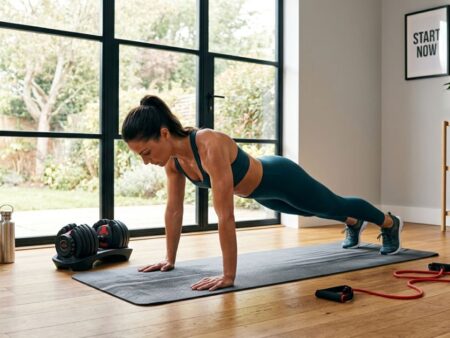
- Bodyweight exercises like push-ups, squats, and lunges can build significant muscle, especially for beginners
- Resistance bands and adjustable dumbbells allow for progressive overload without a full gym setup
- Consistency is often easier to maintain at home due to convenience
Building Muscle at the Gym
- Access to barbells, machines, and heavier weights allows for more precise progressive overload
- A wider variety of equipment supports targeted muscle development
- Gym environments can offer motivation through community and structure
Both paths work. The best choice depends on personal preference, budget, and lifestyle rather than which option builds muscle “better.”
Common Myths About Natural Muscle Building
There are several persistent myths that discourage people from believing they can build muscle naturally.
- Myth: Only young people can build muscle. Older adults can build meaningful muscle through resistance training, even into their 60s and beyond.
- Myth: Women will get bulky from lifting weights. Most women lack the testosterone levels needed for significant bulk and instead develop toned, defined muscle.
- Myth: Muscle can be built without eating enough. Without adequate calories and protein, the body cannot repair or grow muscle tissue effectively.
- Myth: More time in the gym always means more muscle. Overtraining without proper recovery can actually hinder muscle growth.
- Myth: Genetics make natural muscle growth impossible for some people. Genetics affect the rate and ceiling of growth, not whether growth is possible at all.
Final Thoughts
Almost everyone has the biological ability to build muscle naturally. Genetics, age, and lifestyle factors influence how quickly and how much muscle someone can gain, but they rarely make muscle growth impossible. The real keys to success are consistent training with progressive overload, adequate protein and calorie intake, quality sleep, and patience over months and years rather than days and weeks.
For anyone feeling discouraged by slow progress, the most important step is simply staying consistent. Natural muscle building rewards those who show up, train smart, eat well, and give their bodies the time they need to adapt and grow.
Disclaimer: The information provided on this website is for educational and informational purposes only and is not intended as medical advice. Always consult a qualified healthcare professional before starting any exercise program, changing your diet, or using supplements.