We’re reader-supported. This means when you buy through links on our site, we may earn an affiliate commission.
Some people seem to gain muscle just by looking at a barbell, while others train hard for months and barely see a difference on the scale. If the second description sounds familiar, there is a good chance the label “hardgainer” applies.
Hardgainers are people with naturally fast metabolisms, smaller appetites, or lean body types who find it difficult to put on size no matter how consistent they are in the gym. The good news is that being a hardgainer is not a life sentence.
With the right training approach, nutrition strategy, and recovery habits, hardgainers can absolutely build muscle, and often faster than they expect once they stop making a few common mistakes.
This article breaks down what actually works for hardgainers, why so many of the usual “bulk up” tips fail for this body type, and how to build a realistic plan that leads to real, visible muscle growth.
What Makes Someone a Hardgainer
A hardgainer is typically someone with an ectomorph body type. This means a naturally thin frame, narrow shoulders and hips, fast metabolism, and a tendency to burn calories quickly even at rest. Hardgainers often report that they can eat a large meal and still feel hungry an hour later, or that they lose weight quickly when they are not intentionally eating more.
Common traits of hardgainers include:
- A high metabolic rate that burns through calories fast
- Small appetite or difficulty eating large meals
- Thin bone structure and long limbs
- Muscles that feel like they respond slowly to training
- A tendency to feel fatigued easily during high-volume workouts
It is worth noting that genetics play a role, but genetics are not destiny. Many hardgainers have built impressive physiques once they understood how their body responds differently to training and food compared to the average gym-goer.
Why Standard Muscle-Building Advice Often Fails Hardgainers
Most generic fitness advice is written for an average body type, not for someone who struggles to gain weight. This is one of the biggest reasons hardgainers feel stuck. Advice like “just eat more” or “train like a bodybuilder” often backfires because it does not account for a fast metabolism or a nervous system that needs more recovery time between sessions.
The Overtraining Trap
A lot of hardgainers assume that more training equals more muscle. In reality, hardgainers tend to have a lower tolerance for training volume. Doing five or six days of intense lifting a week, especially with lots of isolation exercises, can leave a hardgainer in a constant state of recovery deficit. The muscle never gets the chance to actually grow because the body is too busy trying to repair itself.
The Undereating Trap
Many hardgainers think they are eating enough simply because they feel full. But feeling full and eating enough calories to build muscle are two different things. A small appetite combined with a fast metabolism means many hardgainers are in a calorie deficit without realizing it, which makes muscle growth almost impossible.
The Core Principles of Muscle Growth for Hardgainers
Building muscle as a hardgainer comes down to three main pillars working together: training, nutrition, and recovery. Skipping or underestimating any one of these will slow progress significantly.
Training Smarter, Not Just Harder
Hardgainers generally respond better to a training style that emphasizes compound movements, lower to moderate volume, and enough intensity to trigger growth without wrecking recovery.
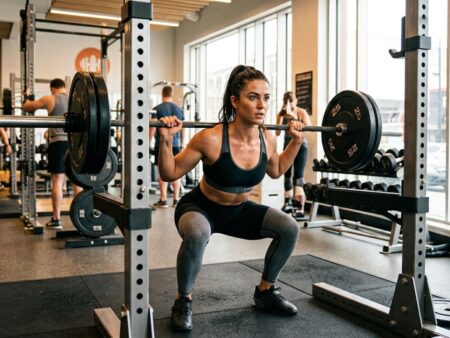
- Focus on compound lifts like squats, deadlifts, bench press, overhead press, and rows since they recruit the most muscle fibers per exercise
- Limit training sessions to three or four days per week to allow adequate recovery
- Keep workouts under 60 to 75 minutes to avoid excessive fatigue and cortisol buildup
- Use a rep range of roughly 6 to 12 reps per set for most exercises to balance strength and hypertrophy
- Avoid excessive isolation work early on, since compound lifts already stimulate small muscle groups indirectly
- Track progressive overload every week by adding small amounts of weight, reps, or sets over time
Eating for Growth, Not Just Maintenance
Nutrition is often the missing piece for hardgainers. Since appetite is naturally low, eating enough can feel like a chore, but it is non-negotiable for muscle growth.
- Aim for a calorie surplus of roughly 300 to 500 calories above maintenance level
- Prioritize protein intake around 1.6 to 2.2 grams per kilogram of body weight per day
- Include calorie-dense foods like nuts, nut butters, whole milk, oats, avocado, and olive oil to make hitting calorie goals easier
- Eat frequently throughout the day rather than relying on three large meals, since smaller more frequent meals are easier to finish
- Consider liquid calories such as smoothies or mass gainer shakes if solid food feels like too much
Recovery as a Growth Tool
Muscle does not grow in the gym. It grows during rest, when the body repairs the microscopic damage caused by training. Hardgainers often underestimate how much recovery they need compared to other body types.
- Sleep 7 to 9 hours per night to support hormone production, including testosterone and growth hormone
- Take at least one full rest day between intense training sessions for the same muscle group
- Manage stress levels, since chronically high cortisol can interfere with muscle repair
- Stay hydrated, since even mild dehydration can reduce workout performance and recovery quality
Sample Weekly Training Split for Hardgainers
Below is an example of a beginner to intermediate friendly split designed specifically with hardgainer recovery needs in mind.
| Day | Focus | Example Exercises |
|---|---|---|
| Monday | Upper Body Push | Bench press, overhead press, triceps dips |
| Tuesday | Rest or light cardio | Walking, mobility work |
| Wednesday | Lower Body | Squats, Romanian deadlifts, calf raises |
| Thursday | Rest | Full recovery |
| Friday | Upper Body Pull | Deadlifts, rows, pull-ups, biceps curls |
| Saturday | Optional light full body | Light compound movements |
| Sunday | Rest | Full recovery |
This structure gives each major muscle group enough time to recover before it is trained again, which is critical for a body type that tends to take longer to bounce back from intense sessions.
Common Mistakes Hardgainers Should Avoid
Even with the right intentions, many hardgainers unknowingly sabotage their progress. Being aware of these mistakes can save months of frustration.
- Doing too much cardio, which burns calories that are needed for muscle repair
- Skipping meals due to a busy schedule or low appetite
- Chasing a “pump” with high-rep isolation work instead of building strength on compound lifts
- Changing workout programs too frequently before giving one enough time to work
- Comparing progress to people with completely different body types and genetics
- Not tracking food intake, which makes it easy to underestimate how much is actually being eaten
How Long Does It Take to See Results
Patience is one of the most underrated tools for a hardgainer. Visible muscle growth typically takes a minimum of eight to twelve weeks of consistent training and eating, and noticeable strength gains often show up sooner than visual changes. Because hardgainers start from a leaner baseline, early progress often shows up as improved strength and slightly fuller muscles before major size changes are visible.
Consistency matters more than intensity here. A hardgainer who trains three times a week and eats enough food for six months will almost always outperform someone who trains six days a week but eats inconsistently and skips recovery.
Supplements Worth Considering
Supplements are not magic, but a few can support the process when the fundamentals are already in place.
- Whey protein powder to help hit daily protein targets without needing extra solid meals
- Creatine monohydrate, one of the most researched supplements for strength and muscle gain
- A mass gainer shake for those who genuinely struggle to eat enough through food alone
- A basic multivitamin to cover any nutritional gaps from an increased calorie intake
Building a Sustainable Mindset
Perhaps the most overlooked part of muscle building for hardgainers is mindset. It is easy to get discouraged watching others gain size more easily, but every body responds to training differently. Hardgainers who succeed long term tend to shift their focus away from quick results and toward building sustainable habits around training, eating, and sleeping well.
Tracking progress with photos, strength numbers, and body measurements rather than the scale alone can also help keep motivation steady, since muscle gain is often slower and less dramatic than fat loss in the early stages.
Final Thoughts
Hardgainers can absolutely build muscle, and often faster than expected once training volume is dialed back, calorie intake is increased with intention, and recovery is treated as seriously as the workouts themselves. The formula is not complicated, but it does require consistency and patience.
By focusing on compound lifts, eating enough nutrient-dense food, sleeping well, and avoiding the common traps of overtraining and undereating, hardgainers can turn their naturally lean frame into a strong, muscular physique over time.
Disclaimer: The information provided on this website is for educational and informational purposes only and is not intended as medical advice. Always consult a qualified healthcare professional before starting any exercise program, changing your diet, or using supplements.