We’re reader-supported. This means when you buy through links on our site, we may earn an affiliate commission.
Bodyweight training has stood the test of time. Long before commercial gyms, protein shakes, and high-tech fitness equipment entered the picture, people were building strong, capable bodies using nothing more than their own body weight and the ground beneath their feet.
Whether someone is a seasoned gym-goer looking to supplement their training, a beginner stepping into fitness for the first time, or a home workout enthusiast with limited space and zero equipment, bodyweight exercises offer an accessible, effective, and versatile solution.
This article covers the 10 best bodyweight exercises that fitness enthusiasts, athletes, and everyday people swear by. Each movement delivers real results, targets key muscle groups, and can be scaled to suit virtually any fitness level.
Why Bodyweight Training Deserves a Spot in Every Routine
Bodyweight training is not a consolation prize for those without gym access. It is a legitimate and powerful training modality that builds functional strength, improves mobility, enhances endurance, and trains coordination all at once. Some of the world’s most impressive physiques have been built primarily through calisthenics and bodyweight methods.
There are several compelling reasons to incorporate bodyweight work into any fitness plan:
- No equipment or gym membership required
- Can be done anywhere including at home, in a park, or while traveling
- Reduces injury risk by using natural movement patterns
- Improves body awareness and coordination
- Scales easily from beginner to advanced with simple modifications
- Builds both strength and cardiovascular fitness simultaneously
The key to getting results from bodyweight training, just like any other form of exercise, is consistency, progressive overload, and smart programming. Now, here are the 10 best bodyweight exercises worth mastering.
1. Push-Ups
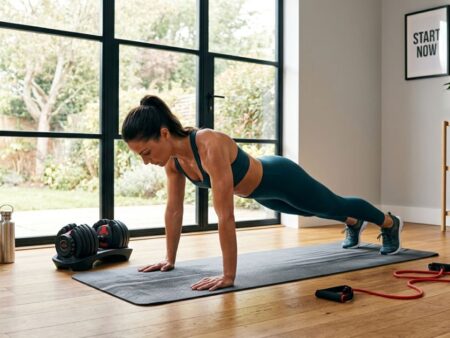
Few exercises are as universally respected as the push-up. It is one of the most complete upper body movements a person can perform with zero equipment, targeting the chest, shoulders, triceps, and core all at once.
The standard push-up involves lowering the body from a high plank position until the chest nearly touches the floor, then pressing back up to full arm extension. Proper form requires keeping the core tight, elbows at roughly a 45-degree angle to the body, and the hips in line with the shoulders and heels.
Push-up variations allow for tremendous variety and progression:
- Wide-grip push-ups place more emphasis on the chest
- Diamond push-ups shift the load to the triceps
- Decline push-ups target the upper chest and shoulders
- Archer push-ups build unilateral strength toward one-arm progressions
- Explosive or clap push-ups develop upper body power
For beginners, knee push-ups or incline push-ups against a wall or bench make a great starting point.
2. Pull-Ups and Chin-Ups
If the push-up is king of pushing movements, the pull-up holds the same crown for pulling. Pull-ups target the lats, biceps, rear deltoids, and core, making them one of the most effective upper body exercises in existence.
A pull-up uses an overhand grip, while a chin-up uses an underhand grip that places slightly more emphasis on the biceps. Both variations are excellent and should be trained regularly.
For beginners who cannot yet perform a full pull-up, the following progressions help build toward the movement:
- Dead hangs to develop grip strength and shoulder stability
- Scapular pull-ups to activate the lats before pulling
- Resistance band-assisted pull-ups to reduce the load
- Negative pull-ups where the body is lowered slowly from the top position
- Jumping pull-ups to practice the top half of the movement
Advanced practitioners can work toward weighted pull-ups, L-sit pull-ups, or the demanding muscle-up.
3. Squats
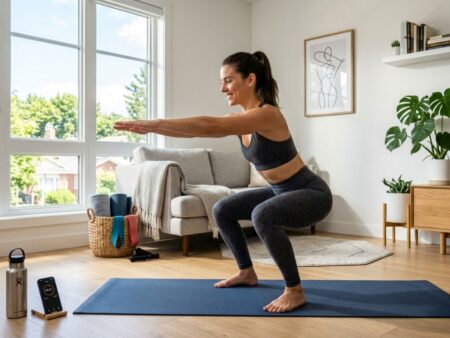
The squat is often called the king of all exercises, and with good reason. It trains the quads, hamstrings, glutes, and core simultaneously while also developing balance and hip mobility. The bodyweight squat is accessible to nearly everyone and serves as a foundation for more demanding lower body work.
Good squat mechanics involve feet shoulder-width apart, toes slightly turned out, chest tall, and hips driving back and down until the thighs are parallel to the floor or lower. Knees should track over the toes and heels must stay flat on the ground.
Once the basic squat is mastered, progressions include:
- Sumo squats for greater inner thigh activation
- Jump squats for explosive power development
- Bulgarian split squats to train each leg independently
- Pistol squats for advanced single-leg strength and balance
- Sissy squats for intense quad isolation
4. Lunges
Lunges are a staple lower body exercise that develop single-leg strength, balance, and hip flexibility. They closely mimic real-world movements like walking, climbing stairs, and running, making them highly functional.
The standard forward lunge involves stepping one foot forward, lowering the back knee toward the ground, then returning to a standing position. Reverse lunges, lateral lunges, and walking lunges each offer slightly different stimulus and challenge the body in new ways.
- Reverse lunges are gentler on the knees and great for beginners
- Lateral lunges target the inner thighs and improve hip mobility
- Curtsy lunges add a rotational component and hit the glutes differently
- Jump lunges build explosive leg power and cardiovascular endurance
5. Plank
The plank is the gold standard of core stability training. Unlike crunches or sit-ups that primarily target the superficial abdominal muscles through movement, the plank trains the deep core muscles isometrically, building the kind of stability that transfers to virtually every other exercise.
A proper plank is held with forearms on the ground, elbows under the shoulders, and the body in a straight line from head to heels. The core is braced, glutes are squeezed, and breathing remains steady throughout the hold.
Beyond the standard forearm plank, a wide variety of plank progressions keep training fresh and challenging:
- High plank (push-up position plank) adds shoulder stabilization demands
- Side plank isolates the obliques and challenges lateral stability
- Plank with shoulder taps adds an anti-rotation component
- Plank to downward dog introduces dynamic movement and hip flexor stretch
- RKC plank maximizes full-body tension for a harder static challenge
6. Dips (Tricep and Chest Dips)
Bodyweight dips are an exceptional upper body pressing exercise that can be performed on parallel bars, gymnastics rings, or even the edge of a sturdy chair or bench at home. They primarily target the triceps, chest, and anterior deltoids.
For a more tricep-focused dip, the torso stays upright. Leaning slightly forward shifts the emphasis toward the chest and produces a movement more similar to a decline press. Dips are a compound exercise that builds impressive pressing strength and muscle mass in the upper body.
Beginners can start with bench dips and progress to full parallel bar dips over time. Advanced athletes can add weight using a dip belt or progress to ring dips for an added stability challenge.
7. Mountain Climbers
Mountain climbers bridge the gap between strength and cardiovascular conditioning. Starting in a high plank position, alternating knees are driven toward the chest in a running-like motion. The faster the movement, the greater the cardio demand. Slowing down and controlling each rep shifts the focus to core strength and stability.
Mountain climbers are excellent for:
- Building core endurance through sustained anti-extension and rotation demands
- Elevating heart rate for fat burning and cardiovascular benefits
- Warming up the whole body before a training session
- Finishing a workout as a conditioning burner
Cross-body mountain climbers, where the knee drives toward the opposite elbow, increase the oblique activation significantly.
8. Glute Bridges and Hip Thrusts
Glute bridges are one of the most underrated bodyweight exercises for developing strong, powerful glutes. Lying on the back with knees bent and feet flat on the floor, the hips are driven upward until the body forms a straight line from knees to shoulders. The glutes are squeezed hard at the top and held briefly before lowering.
Single-leg glute bridges intensify the exercise by isolating one glute at a time and building unilateral strength. Those seeking a greater range of motion can elevate the upper back on a bench to perform a full hip thrust.
Strong glutes contribute to improved athletic performance, reduced lower back pain, and better posture. For anyone spending long hours sitting, glute bridge work is particularly valuable for re-activating dormant glute muscles.
9. Burpees
The burpee is one of the most demanding total-body exercises in existence. It combines a squat, plank, push-up, and jump into one fluid movement, training multiple muscle groups while simultaneously spiking the heart rate. Few exercises deliver as much work in as little time.
A standard burpee involves dropping to the floor, performing a push-up, jumping the feet forward to a squat position, and then exploding upward into a jump with hands overhead. The movement can be modified by removing the push-up or the jump for lower-impact versions.
Burpees are ideal for:
- HIIT (High-Intensity Interval Training) circuits
- Improving cardiovascular fitness rapidly
- Full-body conditioning when training time is limited
- Burning calories efficiently in minimal time
10. Pike Push-Ups and Handstand Push-Ups
For anyone looking to develop serious overhead pressing strength and shoulder size without a barbell or dumbbells, pike push-ups and their more advanced cousin, the handstand push-up, are the answer.
A pike push-up is performed in a downward dog-like position with the hips elevated high and the head driving toward the floor between the hands. This movement closely mimics the overhead press and targets the deltoids, upper traps, and triceps.
As strength improves, the progression toward wall-supported handstand push-ups becomes achievable. This is a challenging skill that also builds significant strength and body awareness.
Comparing the 10 Best Bodyweight Exercises
| Exercise | Primary Muscles | Difficulty | Equipment Needed |
|---|---|---|---|
| Push-Ups | Chest, shoulders, triceps, core | Beginner | None |
| Pull-Ups / Chin-Ups | Lats, biceps, rear delts | Intermediate | Pull-up bar |
| Squats | Quads, glutes, hamstrings | Beginner | None |
| Lunges | Quads, glutes, hamstrings | Beginner | None |
| Plank | Core, shoulders, glutes | Beginner | None |
| Dips | Triceps, chest, shoulders | Intermediate | Bars or bench |
| Mountain Climbers | Core, shoulders, hip flexors | Beginner | None |
| Glute Bridges | Glutes, hamstrings, core | Beginner | None |
| Burpees | Full body | Intermediate | None |
| Pike Push-Ups | Shoulders, triceps, upper back | Intermediate | None |
How to Build a Bodyweight Workout Program
Knowing the exercises is only half the battle. Putting them together into an effective program is what produces real results over time.
Sample Full-Body Bodyweight Routine
A well-structured bodyweight session might look like this:
- Warm-up: 5 to 10 minutes of light movement, dynamic stretches, and mobility work
- Push: Push-ups 3 sets of 10 to 20 reps
- Pull: Pull-ups or inverted rows 3 sets of 5 to 12 reps
- Legs: Squats or lunges 3 sets of 12 to 20 reps
- Core: Plank holds 3 sets of 30 to 60 seconds
- Conditioning: Burpees or mountain climbers 2 to 3 rounds of 30 seconds
- Cool-down: Static stretching and deep breathing
Principles for Progress
Progress in bodyweight training comes from applying the same principles as weight training:
- Progressive overload: Add reps, sets, reduce rest periods, or advance to harder variations
- Consistency: Train at least 3 to 4 times per week for best results
- Recovery: Allow muscles time to repair between sessions
- Nutrition: Adequate protein intake supports muscle building regardless of training style
- Sleep: Quality rest is where the actual adaptation and muscle growth occurs
Final Thoughts
Bodyweight training is far more than a fallback for those without gym access. It is a complete, scalable, and highly effective system for building strength, endurance, and a well-conditioned physique.
The 10 exercises covered in this article represent some of the most time-tested and results-driven movements in all of fitness, and mastering them opens the door to incredible physical development.
Whether someone is grinding through pull-ups in a garage gym, knocking out push-ups in a hotel room, or perfecting their pistol squat in the park, bodyweight training delivers. The only equipment truly needed is commitment, consistency, and a willingness to keep showing up.
Disclaimer: The information provided on this website is for educational and informational purposes only and is not intended as medical advice. Always consult a qualified healthcare professional before starting any exercise program, changing your diet, or using supplements.