We’re reader-supported. This means when you buy through links on our site, we may earn an affiliate commission.
For decades, the gym community has debated whether lifting heavy iron is the only path to a well-built physique. Walk into any commercial gym and the free weights section is packed with people chasing muscle gains, while the corner with the pull-up bar often sits quietly underused.
But a growing wave of athletes, coaches, and fitness enthusiasts are proving that bodyweight training deserves far more respect than it typically gets.
So the question stands: can bodyweight exercises actually build serious muscle? The short answer is yes. But understanding why, how, and under what conditions requires a closer look at the science behind muscle growth and the unique demands that calisthenics place on the human body.

How Muscle Growth Actually Works
Before diving into whether bodyweight training triggers meaningful hypertrophy, it helps to understand what causes muscles to grow in the first place. Muscle growth, or hypertrophy, occurs when muscle fibers are subjected to sufficient mechanical tension, metabolic stress, and muscle damage. These three mechanisms work together to signal the body to repair and rebuild muscle tissue slightly larger and stronger than before.
The key insight here is that none of these mechanisms are exclusive to barbells or dumbbells. What matters is that the muscle is challenged adequately. Whether the resistance comes from a loaded barbell or the trainer’s own bodyweight pressing against gravity, the physiological response can be remarkably similar, provided the training stimulus is intense enough.
Progressive overload is the cornerstone of any effective muscle-building program. In weight training, this typically means adding more weight over time. In bodyweight training, progression looks different but is equally effective. Trainees progress by advancing to harder exercise variations, increasing reps and sets, manipulating tempo, reducing rest periods, or shifting leverage to make movements more mechanically demanding.
The Science Behind Bodyweight Hypertrophy
Research has consistently shown that the load used in resistance training does not need to be extremely heavy to stimulate muscle growth, provided the set is taken close to muscular failure. Studies comparing light loads (as low as 30% of one-rep max) to heavier loads found comparable muscle gains when both groups trained with similar effort levels. This finding has enormous implications for bodyweight training, where the absolute load is fixed but relative intensity can be maximized.
Bodyweight exercises also tend to involve multiple joints and muscle groups working simultaneously. This increases overall training efficiency and creates a significant hormonal response, both of which support muscle development. Compound movements like push-ups, pull-ups, dips, and squats recruit large amounts of muscle tissue, making them powerful hypertrophy tools.
Muscle Tension and Time Under Tension
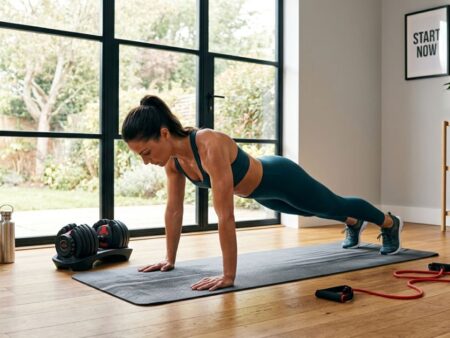
One advantage bodyweight training offers is the ability to easily manipulate time under tension. Slowing down a push-up so that the lowering phase takes four seconds dramatically increases the mechanical tension placed on the chest, triceps, and anterior deltoids. This technique, known as tempo training, is a well-established strategy for maximizing hypertrophy and translates naturally to floor-based and suspension-based exercises.
Stabilizer Muscle Engagement
Another often-overlooked advantage of bodyweight exercises is the demand they place on stabilizing muscles. A barbell bench press uses the bench itself to stabilize the torso, but a push-up requires the entire core and shoulder girdle to maintain a rigid, aligned body position. This means more muscles are working at once, and smaller stabilizer muscles that often lag behind in machine-based training get significant development.
Bodyweight vs. Weight Training: A Comparison
Many gym-goers want to know how bodyweight training stacks up against traditional weight training when the goal is building muscle. The honest answer is that each has distinct advantages depending on the training stage and goals of the individual.
| Factor | Bodyweight Training | Weight Training |
|---|---|---|
| Beginner muscle gains | Very effective | Very effective |
| Intermediate hypertrophy | Effective with progressions | Highly effective |
| Advanced mass building | Challenging, requires skill | Easier to overload |
| Joint stress | Generally lower | Can be higher |
| Equipment cost | Minimal to none | Moderate to high |
| Mobility and flexibility | Naturally developed | Requires extra work |
| Portability | Extremely high | Low |
| Skill development | High (balance, coordination) | Moderate |
| Upper body strength | Excellent | Excellent |
| Lower body mass | Moderate (advanced needed) | Easier to achieve |
The table illustrates that for most people, especially beginners and intermediates, bodyweight training is a highly competitive method for building muscle. The gap between the two approaches tends to widen only at advanced levels where sheer overload becomes difficult to achieve without external weight.
The Best Bodyweight Exercises for Building Muscle
Not all bodyweight movements are created equal when it comes to hypertrophy. The following exercises have the greatest potential to stimulate serious muscle growth across the major muscle groups.
Upper Body
- Pull-ups and chin-ups target the latissimus dorsi, biceps, and rear deltoids with significant loading. Adding progressions such as archer pull-ups or one-arm negatives increases the challenge dramatically.
- Push-up variations including wide-grip, close-grip, archer, decline, and ring push-ups build the chest, shoulders, and triceps through a range of angles.
- Dips on parallel bars or rings are among the most effective bodyweight movements for chest and tricep development, offering a deep stretch under load.
- Pike push-ups and handstand push-ups directly target the deltoids in a way that few other bodyweight exercises can replicate.
- Inverted rows using a bar or rings build the mid-back, rear deltoids, and biceps and are accessible to nearly all fitness levels.
Core and Midsection
- Hollow body holds and L-sits build deep core strength and compress the hip flexors and abdominals under sustained tension.
- Dragon flags popularized by Bruce Lee are a high-level core exercise that builds the entire anterior chain.
- Ab wheel rollouts using a simple piece of equipment challenge the rectus abdominis and obliques through a long range of motion.
Lower Body
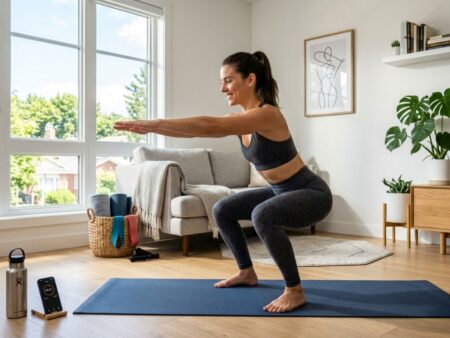
- Bulgarian split squats using bodyweight alone are brutally effective for building quads, glutes, and hamstrings, particularly when performed with a slow tempo.
- Single-leg Romanian deadlifts challenge the posterior chain through a full range of motion without any equipment.
- Jump squats and plyometric lunges apply explosive force to the legs, stimulating fast-twitch muscle fibers that contribute to both power and size.
- Glute bridges and single-leg hip thrusts specifically target the glutes and hamstrings when loaded through repetition, tempo, and pause techniques.
Common Mistakes That Limit Muscle Growth in Bodyweight Training
Many people attempt bodyweight training but fail to see meaningful muscle gains. This is rarely because the method is ineffective. More often, it comes down to predictable errors in approach.
- Staying in the same rep range indefinitely without progressing to harder variations is the most common mistake. Once 20 push-ups feel comfortable, the body has adapted and growth stalls.
- Avoiding difficult progressions out of intimidation prevents trainees from accessing the higher levels of tension needed for advanced hypertrophy.
- Neglecting the posterior chain by focusing only on push movements and ignoring pull-ups, rows, and hip-dominant exercises creates muscle imbalances.
- Insufficient volume is a frequent issue. Bodyweight training often requires higher total sets and reps to match the stimulus of weighted training, especially for experienced athletes.
- Ignoring nutrition is perhaps the most significant limiting factor. Muscle cannot be built without adequate protein intake and caloric support, regardless of the training method used.
- Skipping progressive overload entirely and treating bodyweight workouts as casual movement rather than structured training destroys any chance of meaningful hypertrophy.
Building a Bodyweight Program for Serious Muscle
A well-structured bodyweight program for muscle building should include a push, pull, and leg focus with adequate volume and progressive challenges built in. Here is a practical framework for structuring a weekly bodyweight hypertrophy program.
Sample Weekly Structure
- Day 1: Push focus involving push-up variations, dips, and pike push-ups targeting chest, shoulders, and triceps
- Day 2: Pull focus using pull-up variations and inverted rows to develop back width and thickness along with bicep strength
- Day 3: Legs and core using split squats, single-leg deadlifts, glute bridges, and core work like hollow holds and dragon flags
- Day 4: Rest or active recovery with light mobility work, stretching, or low-intensity movement
- Day 5: Full body combining compound movements from all planes of motion at moderate intensity
- Day 6: Skills and advanced progressions working toward handstands, muscle-ups, or pistol squats as long-term goals
- Day 7: Rest
For hypertrophy, each session should include 3 to 5 sets per major movement pattern with reps taken close to muscular failure. Rest periods of 60 to 90 seconds between sets are appropriate for metabolic stress, while longer rests of 2 to 3 minutes suit heavier skill work.
Who Benefits Most from Bodyweight Training
Bodyweight training is not exclusively for beginners or people without gym access. Many demographics find it particularly well suited to their needs.
- Beginners make rapid strength and muscle gains from bodyweight training and build excellent foundational movement patterns before touching weights
- Home gym athletes who train in limited space with no equipment can build impressive physiques using nothing more than floor space, a pull-up bar, and parallel bars
- Travelers and remote workers benefit enormously from having a portable, equipment-free method of maintaining and building muscle during trips or deployments
- Athletes in sports where relative strength and body control matter, such as gymnastics, martial arts, and climbing, often rely heavily on calisthenics as their primary training method
- Individuals recovering from injuries find bodyweight training easier to scale and modify than barbell training, with lower joint stress in many movements
- Experienced lifters can use bodyweight progressions as effective supplementary training to address weak links, improve mobility, and add training volume without additional loading stress
The Verdict
Bodyweight exercises can absolutely build serious muscle. The evidence from both research and real-world results is compelling. Gymnasts and calisthenics athletes routinely display physiques that rival those built in commercial gyms, often without ever touching a barbell.
The ceiling of bodyweight training is higher than most people assume, and the floor is accessible to nearly anyone regardless of fitness level or access to equipment. What determines results is not the presence or absence of weights but the consistency, effort, progression, and nutrition that support the training.
For anyone willing to embrace progressive bodyweight training with the same seriousness applied to barbell work, the gains are real, the results are visible, and the journey of mastering the body’s own weight is one of the most rewarding paths in fitness.
Disclaimer: The information provided on this website is for educational and informational purposes only and is not intended as medical advice. Always consult a qualified healthcare professional before starting any exercise program, changing your diet, or using supplements.