We’re reader-supported. This means when you buy through links on our site, we may earn an affiliate commission.
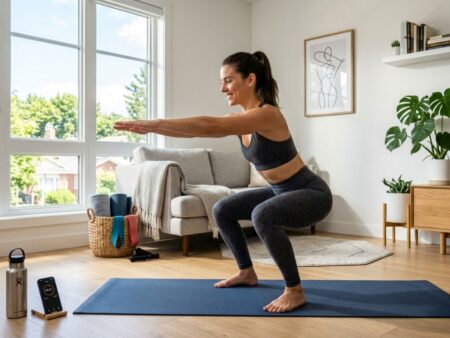
Working out at home has become one of the most popular ways to build strength, burn fat, and stay consistent with fitness goals. Whether someone is short on time, doesn’t have access to a gym, or simply prefers the privacy of their living room, home workouts can deliver real results when done correctly.
This guide breaks down everything a person needs to know to build an effective home workout routine, from equipment choices to sample exercises and weekly planning.
Why Home Workouts Work
Many people assume that a gym membership is required to build muscle or lose weight, but that isn’t true. The human body responds to resistance, repetition, and consistency, not to the location where training happens. Bodyweight exercises like push ups, squats, and lunges can build serious strength when performed with proper form and progressive overload.
Home workouts also remove common barriers that stop people from staying consistent. There is no commute, no waiting for equipment, and no self consciousness about being watched by strangers. For beginners especially, this comfort can make the difference between quitting after a week and sticking with a routine for months.
Benefits of Training at Home
- Saves time by cutting out travel to and from a gym
- Reduces cost since no monthly membership is required
- Offers flexibility to train early morning, late night, or during work breaks
- Provides privacy for people who feel intimidated in a gym setting
- Encourages creativity with minimal equipment
Setting Up a Home Workout Space
A dedicated space, even a small one, helps the brain switch into workout mode. It doesn’t need to be a full home gym. A corner of a bedroom, a garage, or even a hallway can work as long as there is enough room to move freely and lie down if needed.
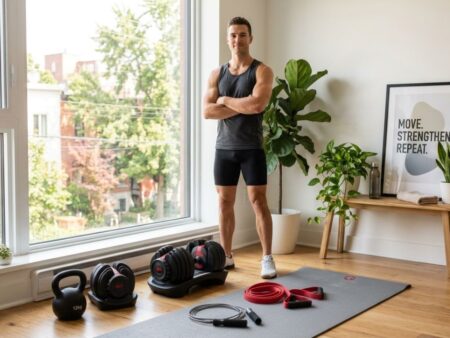
Basic Equipment Worth Considering
While bodyweight training alone can go a long way, a few affordable pieces of equipment can expand what someone is able to do at home.
| Equipment | Approximate Cost | Best For |
|---|---|---|
| Resistance bands | Low | Warm ups, mobility, added resistance |
| Adjustable dumbbells | Medium | Strength training, muscle building |
| Yoga mat | Low | Floor exercises, stretching, comfort |
| Pull up bar | Low to medium | Back and arm development |
| Kettlebell | Medium | Full body conditioning, strength |
| Jump rope | Low | Cardio and coordination |
None of these items are mandatory to get started, but even one or two can add variety and help with long term progress once bodyweight exercises start feeling too easy.
Structuring a Home Workout Routine
A common mistake people make when training at home is doing random exercises without any real plan. Structure matters just as much at home as it does in a commercial gym. A well organized routine should target different muscle groups on different days to allow for recovery and consistent progress.
Sample Weekly Split
- Monday: Upper body push (chest, shoulders, triceps)
- Tuesday: Lower body (quads, hamstrings, glutes, calves)
- Wednesday: Active recovery or light cardio
- Thursday: Upper body pull (back, biceps)
- Friday: Full body strength and core
- Saturday: Cardio or conditioning
- Sunday: Rest
This split can be adjusted based on experience level, available time, and personal goals. Beginners might do well with three full body sessions per week, while more advanced individuals may prefer a more detailed split like the one above.
Best Bodyweight Exercises for Home Training
Bodyweight training remains the foundation of most home workout programs. These movements require no equipment and can be scaled up or down depending on fitness level.
Upper Body Movements
- Push ups (standard, incline, or decline)
- Pike push ups for shoulder development
- Tricep dips using a chair or bench
- Plank shoulder taps for stability and strength
- Superman holds for the lower back
Lower Body Movements
- Bodyweight squats
- Walking lunges
- Bulgarian split squats using a chair
- Glute bridges
- Calf raises
Core Movements
- Plank holds
- Bicycle crunches
- Mountain climbers
- Russian twists
- Dead bug exercise for core control
Building Strength Without Weights
One of the biggest questions people ask is whether it’s actually possible to build muscle without dumbbells or a barbell. The answer is yes, though it requires understanding a concept called progressive overload. This simply means gradually increasing the difficulty of a movement over time so the muscles keep adapting.
Ways to Increase Difficulty Without Adding Weight
- Slow down the tempo of each repetition
- Add pauses at the hardest point of the movement
- Increase the number of repetitions or sets
- Reduce rest time between sets
- Progress to a harder variation, such as moving from knee push ups to standard push ups to one arm push ups
This approach allows continuous progress even without access to heavy weights, which is especially useful for people just starting their fitness journey.
Cardio Options for Home Workouts
Cardiovascular fitness is just as important as strength training, and it doesn’t require a treadmill or stationary bike to improve. Many effective cardio workouts can be done in a small space with little to no equipment.
Effective Home Cardio Exercises
- Jumping jacks
- High knees
- Burpees
- Jump rope intervals
- Shadow boxing
- Stair climbing if stairs are available
A simple approach is to combine several of these movements into a circuit, performing each for 30 to 45 seconds with short rest periods in between. This style of training, often called high intensity interval training, can burn a significant number of calories in a short amount of time.
Sample Full Body Home Workout
For those unsure where to start, a simple full body session can be a great entry point. This type of workout can be done two to three times per week and adjusted as strength improves.
- Bodyweight squats: 3 sets of 15 reps
- Push ups: 3 sets of 10 to 15 reps
- Walking lunges: 3 sets of 12 reps per leg
- Plank hold: 3 sets of 30 to 45 seconds
- Glute bridges: 3 sets of 15 reps
- Mountain climbers: 3 sets of 30 seconds
Rest for 45 to 60 seconds between sets and adjust repetitions based on personal fitness level.
Nutrition and Recovery Basics
Working out at home is only one part of the equation. Nutrition and recovery play a major role in how well the body responds to training. Without proper fuel and rest, progress can stall regardless of how hard someone trains.
Simple Nutrition Tips
- Prioritize protein intake to support muscle repair
- Stay hydrated throughout the day, not just during workouts
- Eat a mix of complex carbohydrates and healthy fats for energy
- Avoid skipping meals, especially after intense training sessions
Recovery Habits That Matter
- Aim for seven to nine hours of sleep each night
- Include rest days in the weekly schedule
- Stretch or do light mobility work on off days
- Listen to the body and avoid pushing through sharp or unusual pain
Staying Motivated With Home Workouts
Consistency is often harder to maintain at home compared to a gym setting, since there are more distractions and fewer external cues to start a session. Building small habits can make a big difference in long term adherence.
Tips to Stay Consistent
- Schedule workouts at the same time each day to build routine
- Set a designated workout space to reduce mental friction
- Track progress using a notebook or fitness app
- Follow a structured program rather than improvising each day
- Celebrate small milestones, such as an extra rep or improved form
Common Mistakes to Avoid
Even motivated individuals can slow their own progress by falling into a few common traps when training at home.
- Skipping warm ups before jumping into intense movements
- Ignoring proper form in favor of speed or repetition count
- Doing the same workout repeatedly without progression
- Underestimating the importance of rest days
- Comparing home workout results to gym based training too quickly
Avoiding these mistakes can help ensure steady, sustainable progress over time.
Final Thoughts
Home workouts offer a practical, affordable, and effective way to build strength, improve cardiovascular health, and stay consistent with fitness goals. With the right structure, a bit of equipment, and a commitment to progressive overload, anyone can achieve meaningful results without ever stepping foot in a commercial gym.
The key lies in consistency, proper nutrition, adequate recovery, and a willingness to adapt workouts as fitness levels improve. For many people, training at home isn’t just a substitute for the gym. It becomes a long term lifestyle that fits seamlessly into their daily routine.
Disclaimer: The information provided on this website is for educational and informational purposes only and is not intended as medical advice. Always consult a qualified healthcare professional before starting any exercise program, changing your diet, or using supplements.