We’re reader-supported. This means when you buy through links on our site, we may earn an affiliate commission.
Finding time to exercise can feel like one more task on an already packed schedule. Between work, family, and everyday responsibilities, the idea of spending an hour or more at the gym can seem impossible. The good news is that a full body workout does not need to take that long to be effective.
A well designed 20-minute full body home workout can build strength, burn calories, and improve overall fitness without requiring any equipment or a gym membership.
This article breaks down everything needed to get started with a quick, effective home workout routine. It covers the benefits of short workouts, how to structure a 20-minute session, sample exercises, and tips for staying consistent.

Why a 20-Minute Workout Can Be Enough
Many people believe that longer workouts always produce better results. In reality, the intensity and consistency of a workout often matter more than its length. A focused 20-minute session that targets multiple muscle groups can be just as beneficial as a longer, less structured gym visit.
Short workouts work well because they:
- Keep the heart rate elevated throughout the session, which supports cardiovascular health
- Reduce the chance of losing motivation partway through, since the end is always in sight
- Fit easily into a busy schedule, whether early morning, during a lunch break, or in the evening
- Encourage consistency, since a short time commitment is easier to stick with over weeks and months
- Allow for full body engagement using compound movements that work several muscles at once
Research on high intensity and circuit style training has shown that shorter sessions performed with minimal rest can improve strength, endurance, and metabolic health. This makes a 20-minute full body routine a practical option for anyone who wants results without spending hours training.
What Makes a Workout “Full Body”
A full body workout is designed to train the major muscle groups in a single session rather than splitting them across different days. This typically includes:
- Legs and glutes
- Chest and shoulders
- Back
- Core and abdominal muscles
- Arms
Instead of isolating one muscle group at a time, full body workouts rely on compound exercises. These are movements that use several joints and muscle groups together, such as squats, push-ups, and lunges. Compound exercises are efficient because they get more done in less time, which is exactly what a 20-minute session needs.
Getting Ready for a Home Workout
Before starting, it helps to set up a small, safe space to move freely. A living room, bedroom, or garage with enough room to stretch out arms and legs is usually enough. No special equipment is required for this routine, although a yoga mat can make floor exercises more comfortable.
A few simple preparation steps can make the workout more effective:
- Wear comfortable clothing and supportive shoes
- Have water nearby to stay hydrated
- Clear the area of furniture or obstacles
- Warm up for a few minutes before starting the main workout
- Keep a phone or timer handy to track work and rest intervals
The Importance of Warming Up
Even a short workout should begin with a brief warm-up. Spending two to three minutes preparing the body helps reduce the risk of injury and improves performance during the main workout. A simple warm-up can include light jogging in place, arm circles, hip rotations, and a few bodyweight squats to get blood flowing to the muscles.
Structuring the 20-Minute Full Body Workout
A well balanced 20-minute session can be broken into three parts: a warm-up, the main circuit, and a short cool-down. Here is a general structure that works well for most fitness levels.
| Segment | Time | Purpose |
|---|---|---|
| Warm-up | 2-3 minutes | Prepare muscles and joints, raise heart rate |
| Main circuit | 14-16 minutes | Build strength and endurance across the full body |
| Cool-down and stretch | 2-3 minutes | Lower heart rate, improve flexibility, reduce soreness |
The main circuit can be organized using a simple format, such as performing each exercise for 40 seconds followed by 20 seconds of rest, then moving to the next exercise. Completing the full circuit two to three times will typically fill the remaining time.
Sample Exercises for a Full Body Routine
The following exercises require no equipment and target different areas of the body. They can be mixed and matched depending on personal preference and fitness level.
Lower Body Movements
- Bodyweight squats
- Reverse lunges
- Glute bridges
- Step-ups using a sturdy chair or stair
Upper Body Movements
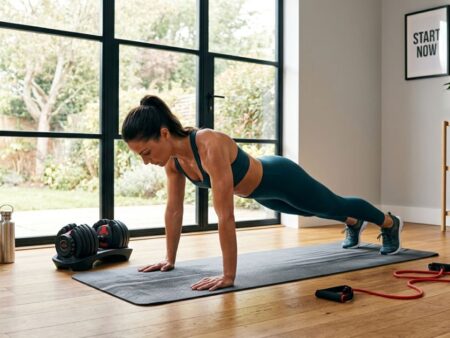
- Push-ups, including modified versions on the knees
- Tricep dips using a chair or bench
- Pike push-ups for shoulders
- Plank shoulder taps
Core and Stability Movements
- Standard plank hold
- Bicycle crunches
- Mountain climbers
- Russian twists
Full Body and Cardio Movements
- Burpees
- Jumping jacks
- High knees
- Squat to overhead reach
A sample 20-minute circuit might include six exercises performed in rotation: squats, push-ups, mountain climbers, reverse lunges, plank hold, and jumping jacks. Repeating this circuit two to three times, with short rest periods between exercises, provides a complete full body workout in a short amount of time.
Adjusting the Workout for Different Fitness Levels
Not everyone starts at the same fitness level, and that is perfectly fine. The same basic routine can be adjusted to match individual needs.
For Beginners
- Reduce the number of rounds from three to two
- Take longer rest periods between exercises
- Use modified versions of exercises, such as knee push-ups instead of standard push-ups
- Focus on proper form rather than speed
For Intermediate Exercisers
- Increase work time to 45 seconds per exercise
- Add a third or fourth round to the circuit
- Combine movements, such as a squat followed by a jump
For Advanced Exercisers
- Shorten rest periods to increase intensity
- Add plyometric variations like jump squats or explosive push-ups
- Increase the number of circuit rounds
- Introduce tempo changes, such as slow lowering phases on push-ups and squats
This flexibility is one of the biggest advantages of a bodyweight based home workout. The same basic movements can be scaled up or down without needing different equipment.
The Role of Consistency Over Intensity
While intensity matters, consistency is what produces long term results. A person who performs a 20-minute full body workout four or five times a week will likely see better progress than someone who occasionally does a much longer workout once a week. Building a habit around a short, manageable workout makes it far easier to stay on track over months and years.
Some practical ways to stay consistent include:
- Scheduling the workout at the same time each day
- Keeping a simple log of workouts completed
- Setting small, achievable goals, such as completing the routine three times a week for a month
- Pairing the workout with an existing habit, such as right after waking up or before dinner
Nutrition and Recovery Considerations
Exercise is only one part of building strength and fitness. Nutrition and recovery play a significant role in how the body responds to a workout routine.
A few general guidelines can support better results:
- Eat a balanced diet with adequate protein to support muscle repair
- Stay hydrated throughout the day, not just during workouts
- Prioritize sleep, since muscle recovery largely happens during rest
- Allow at least one or two rest days per week, even with a short daily routine
- Listen to the body and adjust intensity if soreness or fatigue becomes excessive
Common Mistakes to Avoid
Even a short workout can lose its effectiveness if certain mistakes are made. Being aware of these common issues can help maximize the benefits of a 20-minute session.
- Skipping the warm-up, which increases the risk of injury
- Rushing through exercises with poor form just to finish faster
- Choosing rest periods that are too long, reducing the intensity of the workout
- Doing the same exact routine every single day without variation
- Ignoring signs of pain, which is different from normal muscle fatigue
Rotating exercises every few weeks can also help prevent plateaus and keep the routine engaging rather than repetitive.
Sample Weekly Schedule
For those wondering how to fit this workout into a broader weekly plan, here is a simple example using the 20-minute full body routine as the foundation.
| Day | Focus |
|---|---|
| Monday | Full body circuit |
| Tuesday | Light activity or rest |
| Wednesday | Full body circuit |
| Thursday | Light activity or rest |
| Friday | Full body circuit |
| Saturday | Optional extra circuit or outdoor activity |
| Sunday | Rest and recovery |
This schedule provides three to four structured workouts per week while allowing enough recovery time between sessions.
Final Thoughts
A 20-minute full body home workout proves that effective training does not require a large time commitment or expensive equipment.
By focusing on compound bodyweight exercises, maintaining good form, and staying consistent, it is possible to build strength, improve endurance, and support overall health from the comfort of home.
Whether the goal is general fitness, weight management, or simply building a sustainable exercise habit, this kind of short, structured routine offers a realistic path forward for people at any fitness level.
Disclaimer: The information provided on this website is for educational and informational purposes only and is not intended as medical advice. Always consult a qualified healthcare professional before starting any exercise program, changing your diet, or using supplements.