We’re reader-supported. This means when you buy through links on our site, we may earn an affiliate commission.
Starting a fitness journey can feel overwhelming, especially when a gym membership is not part of the plan. The good news is that a person does not need fancy equipment or a personal trainer to build strength, burn fat, and feel healthier.
A well structured home workout routine can deliver real results for beginners who are willing to stay consistent and follow a smart plan. This article breaks down everything a beginner needs to know to start training at home with confidence.
Why Home Workouts Work So Well for Beginners
Home workouts have become one of the most popular ways to get in shape, and for good reason. They remove many of the common barriers that stop people from exercising in the first place.
- No commute time to a gym, which makes it easier to stay consistent
- No intimidation factor that often comes with crowded gym floors
- Lower cost since many effective routines require little to no equipment
- Flexibility to train early morning, during a lunch break, or late at night
- Privacy to learn proper form without feeling watched
For someone who is new to exercise, these benefits matter. Consistency is the biggest predictor of long term success in fitness, and home workouts naturally remove friction that can derail a new habit.
Setting Realistic Expectations Before Starting
Before diving into any routine, it helps to understand what a beginner should actually expect. Progress in the first few weeks often comes from the body adapting to new movement patterns rather than dramatic muscle growth. Strength gains, improved coordination, and better stamina usually show up before visible physical changes.
A beginner should aim for the following mindset:
- Focus on learning correct form before worrying about intensity
- Expect soreness in the first one to two weeks as the body adjusts
- Track workouts to notice progress even when it feels slow
- Understand that nutrition and sleep play a major role in results
What Equipment Is Actually Needed
One of the biggest myths about working out at home is that expensive machines are required. In reality, a beginner can get an excellent workout using bodyweight exercises alone. As the routine progresses, a few affordable tools can add variety and challenge.
Bodyweight Only Setup
This is the simplest way to begin and requires zero investment. Exercises like squats, push ups, lunges, and planks can build a strong foundation.
Budget Friendly Additions
Once bodyweight movements start to feel easier, a few inexpensive items can extend the life of a home routine.
- A set of resistance bands for added tension
- A pair of adjustable dumbbells
- A yoga mat for comfort during floor exercises
- A pull up bar that mounts in a doorway
None of these items are mandatory, but they can help a beginner continue progressing once bodyweight exercises alone are no longer challenging.
The Foundations of a Beginner Home Workout Routine
A good beginner routine should focus on full body movements that train multiple muscle groups at once. This approach builds a solid base of strength and coordination without overwhelming the body with too much volume too soon.
Training Frequency
Beginners generally do best with three workout days per week, spaced out with rest days in between. This allows enough recovery time while still building a consistent habit.
- Monday, Wednesday, and Friday work well for most schedules
- Rest days can include light walking or stretching
- Two full rest days per week help prevent burnout and injury
Workout Structure
Each session should include a warm up, the main workout, and a cool down. Skipping the warm up or cool down is one of the most common mistakes beginners make, and it increases the risk of injury.
- Warm up for five to ten minutes with light cardio and dynamic stretches
- Main workout lasting twenty to forty minutes depending on fitness level
- Cool down for five to ten minutes with static stretching
Sample Beginner Home Workout Routine
Below is a simple full body routine that can be done three times per week. Each exercise targets major muscle groups and requires little to no equipment.
| Exercise | Target Area | Sets | Reps |
|---|---|---|---|
| Bodyweight Squats | Legs and glutes | 3 | 12 to 15 |
| Push Ups (or knee push ups) | Chest, shoulders, triceps | 3 | 8 to 12 |
| Glute Bridges | Glutes and hamstrings | 3 | 12 to 15 |
| Bent Over Rows (using bands or dumbbells) | Back and biceps | 3 | 10 to 12 |
| Plank | Core | 3 | 20 to 30 seconds |
| Reverse Lunges | Legs and balance | 3 | 10 per leg |
| Standing Shoulder Press (bodyweight or dumbbells) | Shoulders | 3 | 10 to 12 |
This routine can be repeated three times a week with a rest or light activity day in between. As strength improves, reps, sets, or resistance can gradually increase.
Breaking Down the Key Exercises
Understanding proper form for each exercise helps prevent injury and ensures the muscles are being trained effectively.
Squats
Squats are one of the most valuable exercises for beginners because they train the legs, glutes, and core all at once.
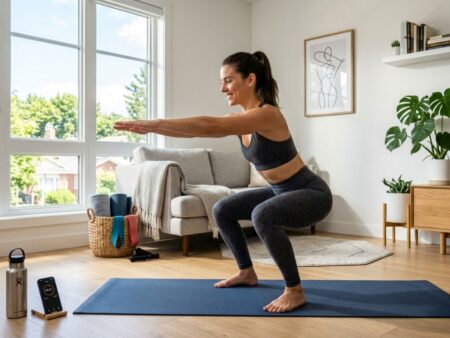
- Stand with feet shoulder width apart
- Lower the hips back and down as if sitting into a chair
- Keep the chest up and knees tracking over the toes
- Push through the heels to stand back up
Push Ups
Push ups build upper body strength and can be modified for any fitness level.
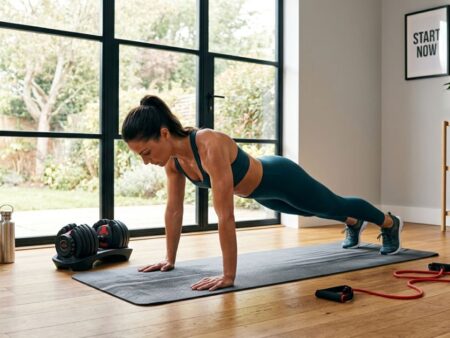
- Start in a plank position with hands under the shoulders
- Lower the chest toward the floor while keeping the body straight
- Push back up to the starting position
- Beginners can drop to the knees to reduce difficulty
Planks
Planks are excellent for building core stability, which supports almost every other exercise.
- Rest on the forearms and toes with the body in a straight line
- Keep the hips level, avoiding sagging or piking
- Engage the core and breathe steadily throughout the hold
Glute Bridges
This exercise strengthens the posterior chain, which is often neglected by beginners.
- Lie on the back with knees bent and feet flat on the floor
- Push through the heels to lift the hips toward the ceiling
- Squeeze the glutes at the top before lowering back down
Cardio Options for Beginners at Home
Strength training is important, but cardiovascular fitness should not be ignored. Beginners do not need a treadmill to get an effective cardio workout at home.
- Jumping jacks for a quick full body cardio burst
- High knees to raise the heart rate and engage the core
- Stair climbing using a set of stairs at home
- Brisk walking around the neighborhood
- Jump rope for an efficient calorie burning workout
Cardio can be added on rest days from strength training or combined into a circuit style workout for those short on time.
Common Mistakes Beginners Should Avoid
Many people give up on home workouts because of avoidable mistakes. Being aware of these pitfalls can help a beginner stay on track.
- Skipping warm ups and jumping straight into intense exercise
- Doing too much too soon, which leads to excessive soreness or injury
- Comparing progress to others instead of focusing on personal growth
- Ignoring proper form in favor of speed or higher reps
- Neglecting rest days, which are essential for muscle recovery
- Expecting fast results instead of committing to a long term process
The Role of Nutrition and Recovery
Exercise alone will not produce the best results without proper nutrition and recovery habits. A beginner should think of workouts, food, and sleep as three parts of the same system.
Nutrition Basics
- Eat a source of protein with most meals to support muscle repair
- Include vegetables and whole grains for sustained energy
- Stay hydrated throughout the day, especially around workouts
- Avoid drastically cutting calories, which can hurt performance and recovery
Recovery Habits
- Aim for seven to nine hours of sleep each night
- Stretch regularly to maintain flexibility and reduce soreness
- Listen to the body and take extra rest when needed
- Consider light activities like walking on rest days to promote blood flow
How to Progress Beyond the Beginner Stage
Once the basic routine starts to feel manageable, it is time to increase the challenge. Progression is what keeps the body adapting and improving over time.
- Increase reps or sets gradually each week
- Add resistance bands or dumbbells to familiar exercises
- Slow down the tempo of each rep to increase time under tension
- Introduce new exercise variations to target muscles differently
- Shorten rest periods between sets to build endurance
Tracking workouts in a notebook or app can make it easier to see when progression is needed and to stay motivated by watching improvement over time.
Staying Motivated with a Home Workout Routine
Motivation naturally rises and falls, so building systems that support consistency is more reliable than relying on willpower alone.
- Set a specific workout schedule and treat it like an appointment
- Create a dedicated workout space, even if it is a small corner of a room
- Use music or a workout playlist to make sessions more enjoyable
- Celebrate small wins like completing a full week of workouts
- Find an accountability partner or share progress with friends or family
Final Thoughts
A beginner does not need a gym membership or expensive equipment to build a strong, healthy body. With a simple full body routine, consistent effort, and attention to recovery and nutrition, real progress is achievable from the comfort of home.
The key is starting with manageable workouts, focusing on proper form, and gradually increasing intensity as strength and confidence grow. Over time, these small consistent steps add up to lasting fitness results.
Disclaimer: The information provided on this website is for educational and informational purposes only and is not intended as medical advice. Always consult a qualified healthcare professional before starting any exercise program, changing your diet, or using supplements.