We’re reader-supported. This means when you buy through links on our site, we may earn an affiliate commission.
Building muscle efficiently is the goal of every serious gym-goer, whether they’re sweating it out in a commercial gym or grinding through reps in a home setup.
But not all exercises are created equal. Some movements trigger far greater muscle growth responses than others, and understanding which ones deliver the best results can completely transform a training program.
This guide breaks down the exercises that build muscle the fastest, the science behind why they work, and how to incorporate them into any routine.
Why Exercise Selection Matters for Muscle Growth
Muscle hypertrophy — the process of muscle fibers growing larger — is driven by mechanical tension, metabolic stress, and muscle damage. The exercises that generate the most of these three stimuli are the ones that pack on size the quickest. Compound movements, which engage multiple muscle groups and joints simultaneously, consistently outperform isolation exercises when the goal is maximum muscle growth in minimum time.
That said, isolation exercises have their place in rounding out a physique and targeting lagging muscle groups. The key is knowing when and how to use each type strategically.
The Role of Progressive Overload
Before diving into specific exercises, it’s worth understanding that no exercise builds muscle fast without progressive overload — the consistent increase of stress placed on the body over time. Whether that means adding weight to the bar, increasing reps, shortening rest periods, or improving form under load, the muscles must continually be challenged to grow. The exercises listed below are the best vehicles for applying progressive overload effectively.
Top Compound Exercises That Build Muscle the Fastest
1. The Squat
Widely regarded as the king of all exercises, the squat is unmatched in its ability to stimulate muscle growth across the entire lower body — and much of the upper body too. When performed with a barbell (back squat or front squat), it recruits the quadriceps, hamstrings, glutes, spinal erectors, core, and even the upper back.
The squat triggers a significant hormonal response, including elevated testosterone and growth hormone levels, which creates a full-body anabolic environment. For anyone wanting to build muscle fast, squats are non-negotiable.
- Primary muscles worked: Quadriceps, glutes, hamstrings
- Secondary muscles worked: Core, spinal erectors, calves
- Best variations: Back squat, front squat, goblet squat, Bulgarian split squat
2. The Deadlift
The deadlift is arguably the most complete strength and muscle-building exercise in existence. It engages virtually every major muscle group in the body, with particular emphasis on the posterior chain — the hamstrings, glutes, and lower back — along with the traps, lats, and forearms.
Heavy deadlifts place enormous mechanical tension on the muscles, which is one of the primary drivers of hypertrophy. Both conventional and Romanian deadlift variations are highly effective, with the Romanian deadlift offering greater hamstring stretch and time under tension.
- Primary muscles worked: Hamstrings, glutes, lower back, traps
- Secondary muscles worked: Lats, core, forearms, quads
- Best variations: Conventional deadlift, Romanian deadlift, sumo deadlift, trap bar deadlift
3. The Bench Press
For upper body mass, few exercises compete with the barbell bench press. It is the premier movement for building a thick, wide chest, while also heavily recruiting the anterior deltoids and triceps. The flat bench press allows for heavier loading than most pressing alternatives, making it ideal for progressive overload.
The incline variation shifts more emphasis to the upper chest and front delts, while the close-grip bench press transitions into a prime tricep builder. Both have earned their place in any serious muscle-building program.
- Primary muscles worked: Pectorals (chest), anterior deltoids
- Secondary muscles worked: Triceps, serratus anterior
- Best variations: Flat barbell bench press, incline bench press, close-grip bench press, dumbbell bench press
4. The Overhead Press
The overhead press — also called the shoulder press or military press — is the definitive exercise for building boulder shoulders. When performed standing with a barbell, it also engages the core, glutes, and upper back to stabilize the load, making it a surprisingly full-body movement.
Pressing overhead builds the medial and anterior deltoids more effectively than almost any other movement and contributes significantly to overall upper body thickness. It also carries a strong carryover to athletic performance and functional strength.
- Primary muscles worked: Deltoids (shoulders), triceps
- Secondary muscles worked: Upper traps, core, serratus anterior
- Best variations: Barbell overhead press, dumbbell shoulder press, Arnold press, push press
5. Pull-Ups and Chin-Ups
Pull-ups and chin-ups are among the most effective bodyweight exercises for building a wide, muscular back. They target the latissimus dorsi — the broadest muscle of the back — along with the biceps, rear delts, and rhomboids. No other bodyweight movement comes close to building upper body pulling strength and size as efficiently.
Adding weight via a dip belt or weighted vest makes these exercises scalable and progressively overloadable, turning them into long-term muscle builders regardless of training level.
- Primary muscles worked: Latissimus dorsi, biceps
- Secondary muscles worked: Rear deltoids, rhomboids, core
- Best variations: Wide-grip pull-up, close-grip chin-up, neutral-grip pull-up, weighted pull-up
6. The Barbell Row
A strong back is built from both vertical pulling (pull-ups) and horizontal pulling (rows). The barbell row, or bent-over row, is the gold standard for horizontal pulling and builds thickness in the mid-back, traps, and lats while also recruiting the biceps and rear delts.
It requires significant core and lower back stability, making it a functional compound movement with broad carryover. Dumbbell rows and cable rows are excellent alternatives for those seeking variety or less spinal loading.
- Primary muscles worked: Lats, rhomboids, traps
- Secondary muscles worked: Biceps, rear deltoids, lower back
- Best variations: Barbell bent-over row, dumbbell row, pendlay row, cable row
7. Dips
Dips are one of the most underrated muscle-building exercises, capable of building impressive mass in the chest, triceps, and anterior deltoids. Depending on lean angle — torso upright for more tricep emphasis, leaning forward for more chest emphasis — dips can be customized to target specific areas.
Like pull-ups, dips can be loaded with weight for progressive overload and are equally effective in the gym or at home with parallel bars.
- Primary muscles worked: Chest (lower), triceps, anterior deltoids
- Best variations: Chest dip, tricep dip, weighted dip, ring dip
Comparison: Compound vs. Isolation Exercises for Muscle Building
| Feature | Compound Exercises | Isolation Exercises |
|---|---|---|
| Muscles recruited | Multiple groups | Single muscle or group |
| Hormonal response | High (testosterone, GH) | Moderate |
| Caloric burn | Higher | Lower |
| Strength carryover | Broad | Narrow |
| Best for | Overall mass gain | Sculpting, finishing |
| Time efficiency | High | Low to moderate |
| Progressive overload potential | High | Moderate |
Best Isolation Exercises to Complement Compound Work
While compound movements should form the foundation of any fast muscle-building program, targeted isolation work fills in the gaps.
- Bicep curls — Barbell or dumbbell curls isolate the biceps and add peak definition that rows and pull-ups alone don’t fully develop
- Tricep pushdowns — Cable pushdowns and skull crushers bring out tricep detail beyond what pressing movements provide
- Lateral raises — Essential for building the medial deltoid (side shoulder) and achieving that wide, capped shoulder look
- Leg curls — Isolated hamstring work supports deadlift performance and fills out the legs
- Calf raises — Often neglected, standing calf raises are the most direct way to grow the calves
- Cable flyes — Excellent for chest isolation and the stretch position, adding detail to pec development
How to Structure a Fast Muscle-Building Workout
The most effective program structure for building muscle quickly centers on compound lifts first, isolation work after. This approach ensures maximum energy and neuromuscular focus is directed at the exercises that produce the most growth.
Sample Weekly Split
- Day 1 – Push (Chest, Shoulders, Triceps): Bench press, overhead press, dips, lateral raises, tricep pushdowns
- Day 2 – Pull (Back, Biceps): Deadlift, barbell row, pull-ups, bicep curls
- Day 3 – Legs (Quads, Hamstrings, Glutes): Squats, Romanian deadlift, leg curls, calf raises
- Day 4 – Rest or Active Recovery
- Day 5 – Full Body or Repeat Push/Pull/Legs
This push/pull/legs split is one of the most proven approaches in bodybuilding and ensures each muscle group is stimulated with enough frequency and volume to grow rapidly.
Home Training: Building Muscle Without a Gym
Building muscle at home is entirely possible with the right exercises and equipment. The following bodyweight and minimal-equipment movements mirror the effectiveness of their gym counterparts:
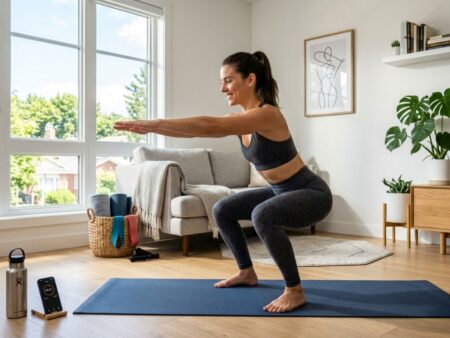
- Bodyweight squats and pistol squats replace barbell squats when no equipment is available
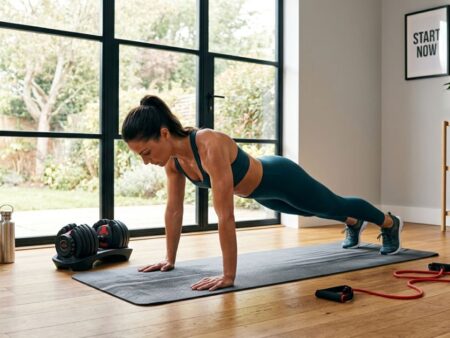
- Push-ups and archer push-ups replace bench press and develop impressive chest and tricep mass
- Pull-ups on a doorframe bar replicate lat pulldowns and rows
- Dips between chairs or on a dip station mirror gym dips effectively
- Romanian deadlifts with dumbbells or resistance bands maintain posterior chain development
- Pike push-ups target the shoulders similarly to overhead pressing
The fundamental principle remains the same at home as in the gym — progressive overload must occur. Increasing reps, adding pauses, using resistance bands, or transitioning to harder variations (e.g., moving from regular push-ups to archer push-ups) ensures continued muscle growth.
Key Factors That Accelerate Muscle Growth
Exercise selection alone does not guarantee fast muscle building. The following factors work in tandem with hard training to maximize results:
- Protein intake — Consuming 1.6 to 2.2 grams of protein per kilogram of bodyweight supports muscle repair and synthesis
- Sleep and recovery — Muscle is built during rest, not during the workout itself; 7 to 9 hours of quality sleep is essential
- Training volume — Most research supports 10 to 20 working sets per muscle group per week for optimal hypertrophy
- Training frequency — Hitting each muscle group at least twice per week accelerates growth compared to once-per-week training
- Consistency — No program works without showing up and doing the work week after week
Conclusion
The exercises that build muscle the fastest are those that engage the most muscle mass under the greatest mechanical tension — squats, deadlifts, bench press, overhead press, pull-ups, rows, and dips. These movements form the backbone of every successful physique, whether the goal is a competitive bodybuilder’s stage-ready physique or a strong, aesthetic everyday body.
By prioritizing these compound lifts, supplementing with targeted isolation work, eating enough protein, recovering well, and applying progressive overload consistently, anyone committed to the process will see significant muscle growth in a matter of months. The formula isn’t complicated — but executing it with discipline is what separates the results from the excuses.
Disclaimer: The information provided on this website is for educational and informational purposes only and is not intended as medical advice. Always consult a qualified healthcare professional before starting any exercise program, changing your diet, or using supplements.