We’re reader-supported. This means when you buy through links on our site, we may earn an affiliate commission.
Not everyone has the time, money, or motivation to drive to a gym every day. The good news is that a person does not need a barbell, a rack of dumbbells, or a fancy machine to build strength, burn fat, and improve overall fitness.
The human body itself is one of the most versatile pieces of equipment available, and with the right plan, a full body workout at home can be just as effective as anything done in a commercial gym.
This article breaks down how to build muscle, improve conditioning, and stay consistent with a full body home workout routine that uses nothing but bodyweight.

Whether someone is a total beginner or an experienced lifter trying to stay in shape while traveling, this guide covers the exercises, structure, and strategy needed to get real results without stepping foot in a gym.
Why Bodyweight Training Works
Many people assume that without weights, there is no way to build serious muscle or strength. That assumption is outdated. Bodyweight training has been used for generations by gymnasts, martial artists, and calisthenics athletes to build incredibly strong, lean, and functional physiques.
The key principle behind any effective workout, with or without equipment, is progressive overload. This simply means gradually making exercises harder over time so muscles are forced to adapt. With bodyweight training, overload can come from:
- Increasing the number of reps or sets performed
- Slowing down the tempo of each movement
- Reducing rest time between sets
- Progressing to a harder variation of an exercise, such as moving from a regular push-up to a decline push-up
- Adding pauses or pulses at the hardest part of a movement
When these principles are applied consistently, the body has no choice but to get stronger, more muscular, and more conditioned, all without a single piece of equipment.
Benefits of Training at Home Without Equipment
A no-equipment full body workout offers several advantages that make it appealing for beginners and seasoned lifters alike.
Convenience and Consistency
There is no commute, no waiting for machines, and no gym membership fees. A workout can be done first thing in the morning, during a lunch break, or late at night. This convenience often leads to better long term consistency, which is the single biggest factor in achieving fitness results.
Builds Functional Strength
Bodyweight exercises tend to mimic real world movement patterns like pushing, pulling, squatting, hinging, and rotating. This builds functional strength that translates directly into daily life, sports performance, and injury prevention.
Low Risk of Injury
Without heavy external weight loading the joints, the risk of injury is generally lower compared to lifting heavy weights with poor form. This makes bodyweight training a great entry point for beginners or anyone returning from injury.
Improves Mobility and Body Control
Many bodyweight movements require balance, coordination, and flexibility. Over time, this improves overall body awareness and mobility, something that is often neglected in traditional weight training.
Warming Up Before a Full Body Workout
Skipping a warm up is one of the most common mistakes people make at home, mostly because there is no gym environment reminding them to prepare their body. A proper warm up increases blood flow, raises core temperature, and activates the muscles that will be used during the workout.
A simple five to eight minute warm up can include:
- Arm circles and shoulder rolls
- Bodyweight squats
- Walking lunges
- Hip circles
- Jumping jacks or light jogging in place
- Cat cow stretches for the spine
This warm up prepares the joints and muscles for the demands of the workout and helps reduce the risk of strains or pulls.
The Full Body Home Workout Routine
Below is a complete full body workout that targets every major muscle group, including the chest, back, shoulders, arms, core, and legs. This routine can be performed two to four times per week, with at least one rest or active recovery day between sessions.
Upper Body Exercises
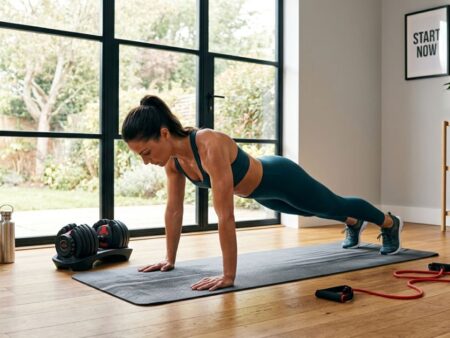
Push-Ups Push-ups remain one of the most effective chest, shoulder, and tricep exercises ever created. Keeping the core tight and the body in a straight line from head to heels ensures proper form and reduces strain on the lower back.
Pike Push-Ups This variation shifts more of the load onto the shoulders, making it an excellent substitute for overhead pressing movements normally done with dumbbells.
Tricep Dips Using a sturdy chair, bench, or even the edge of a couch, tricep dips isolate the back of the arms while also engaging the shoulders and chest.
Superman Pulls Lying face down and lifting the chest and legs off the ground while pulling the arms back mimics a rowing motion, helping to strengthen the back muscles that are often neglected in bodyweight training.
Lower Body Exercises
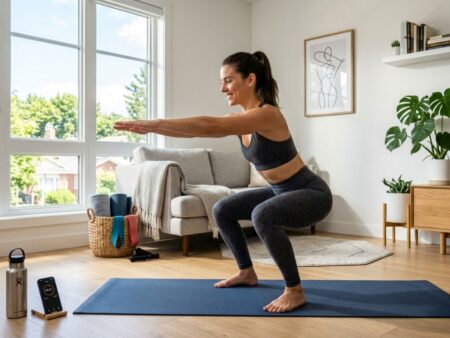
Bodyweight Squats Squats build the quads, hamstrings, and glutes while also improving hip mobility. Depth and control matter more than speed.
Walking Lunges This unilateral movement challenges balance and builds strength in each leg individually, helping to correct muscle imbalances.
Glute Bridges An often underrated exercise, glute bridges strengthen the glutes and hamstrings while also supporting lower back health.
Calf Raises Simple but effective, calf raises can be done anywhere and help build lower leg strength and stability.
Core Exercises
Plank The plank builds core stability and endurance, which supports nearly every other movement in the body.
Bicycle Crunches This exercise targets the obliques and rectus abdominis, helping build a strong and defined midsection.
Mountain Climbers A combination of core work and cardio, mountain climbers raise the heart rate while engaging the entire core.
Leg Raises Focusing on the lower abdominal region, leg raises are a great addition to any core routine.
Sample Full Body Workout Plan
The table below outlines a sample workout that can be done at home in roughly thirty to forty minutes, three to four times per week.
| Exercise | Sets | Reps or Time | Rest Between Sets |
|---|---|---|---|
| Push-Ups | 3 | 10 to 15 reps | 45 seconds |
| Bodyweight Squats | 3 | 15 to 20 reps | 45 seconds |
| Pike Push-Ups | 3 | 8 to 12 reps | 45 seconds |
| Walking Lunges | 3 | 10 reps per leg | 45 seconds |
| Superman Pulls | 3 | 12 to 15 reps | 30 seconds |
| Glute Bridges | 3 | 15 to 20 reps | 30 seconds |
| Plank | 3 | 30 to 60 seconds | 30 seconds |
| Mountain Climbers | 3 | 20 to 30 reps | 30 seconds |
This structure hits every major muscle group and can be adjusted based on fitness level. Beginners can start with fewer sets and reps, while more advanced individuals can increase volume or slow down the tempo to add intensity.
How to Progress Without Adding Weight
One of the biggest challenges with bodyweight training is knowing how to keep making progress once exercises start to feel easy. Fortunately, there are several proven ways to keep the body adapting.
Change the Leverage
Elevating the feet during push-ups, for example, shifts more bodyweight onto the upper chest and shoulders, making the exercise significantly harder without needing any equipment.
Slow Down the Tempo
Performing each rep with a slower eccentric, or lowering phase, increases time under tension, which is a powerful driver of muscle growth.
Reduce Rest Periods
Shortening rest between sets increases the metabolic demand of a workout, improving both muscular endurance and conditioning.
Add Unilateral Movements
Single leg or single arm variations, such as single leg glute bridges or archer push-ups, place more demand on each limb individually, increasing overall difficulty.
Increase Range of Motion
Deepening a squat or extending further in a lunge can make a familiar exercise feel brand new and considerably more challenging.
Common Mistakes to Avoid
Even without equipment, there are several mistakes that can slow down progress or increase the risk of injury.
- Rushing through reps instead of focusing on controlled movement
- Skipping the warm up and going straight into intense exercise
- Neglecting the back and posterior chain in favor of only doing push-ups and squats
- Holding the breath during exertion instead of breathing steadily
- Training the same muscle groups every single day without allowing recovery
- Ignoring core engagement, which leads to poor form and lower back strain
Avoiding these mistakes will help ensure that each workout is both safe and productive.
Nutrition and Recovery Matter Too
Training without equipment is only one piece of the puzzle. Muscle is built and repaired during rest, not just during the workout itself. A few key habits can significantly improve results from any home workout routine.
- Prioritizing sleep, since most muscle recovery and hormone regulation happens during deep sleep
- Eating enough protein throughout the day to support muscle repair
- Staying hydrated, which supports joint health and overall performance
- Allowing at least one or two rest days per week to avoid overtraining
- Listening to the body and adjusting intensity when fatigue or soreness becomes excessive
Who Can Benefit From This Type of Training
A full body home workout without equipment is not just for beginners. It can benefit a wide range of people, including:
- Busy professionals who cannot commit to a daily gym schedule
- Frequent travelers who need a reliable workout wherever they go
- Beginners who want to build a strength foundation before using weights
- Experienced lifters looking for an active recovery or deload option
- Anyone recovering from injury who needs a lower impact way to stay active
- Parents who need to fit in a workout while managing a busy household
Because this style of training requires no equipment and very little space, it removes many of the common barriers that stop people from staying consistent with fitness.
Final Thoughts
Building a strong, capable, and muscular body does not require a gym membership or a garage full of equipment. A well structured full body home workout, built around fundamental movement patterns like pushing, pulling, squatting, and core bracing, can deliver real strength and conditioning results over time.
The key to success lies not in fancy equipment but in consistency, proper form, and a willingness to progressively challenge the body in new ways.
By following a structured plan, warming up properly, avoiding common mistakes, and supporting training with good nutrition and recovery habits, anyone can transform their living room, bedroom, or backyard into an effective personal gym.
Disclaimer: The information provided on this website is for educational and informational purposes only and is not intended as medical advice. Always consult a qualified healthcare professional before starting any exercise program, changing your diet, or using supplements.