We’re reader-supported. This means when you buy through links on our site, we may earn an affiliate commission.
Anyone who spends time in a gym or scrolling through fitness content has probably come across the term “functional hypertrophy training.” It sounds technical, but the idea behind it is actually simple. It is a training style that blends two goals that used to be treated as separate: building muscle size and building real world strength and movement quality.
Instead of choosing between looking strong or being strong, functional hypertrophy training aims to deliver both at the same time.
This article breaks down what functional hypertrophy training actually means, how it differs from traditional bodybuilding, and how anyone training at a gym or at home can start applying it to their own workouts.
Understanding the Basics of Functional Hypertrophy Training
Functional hypertrophy training is a method that combines heavier compound lifting with hypertrophy focused rep ranges and accessory work. The goal is to grow muscle while also improving the strength, stability, and coordination needed for everyday movement, sports performance, or general athleticism.
Traditional bodybuilding style training often isolates muscles with lighter weight and higher reps, focusing mainly on the way muscles look. Functional training, on the other hand, has historically focused on movement patterns, balance, and stability, sometimes with lighter loads.
Functional hypertrophy training sits in the middle of these two worlds. It uses moderately heavy weights, compound movements, and rep ranges that are proven to build muscle, while still respecting good movement mechanics and joint health.
In simple terms, it is training that makes muscles bigger and stronger while also making the body more capable of doing real things with that strength, whether that is carrying groceries, playing a weekend sport, or lifting a heavy box without pain.
Why This Approach Has Become Popular
Many lifters eventually notice that having big muscles does not always translate into being useful in daily life or in sports. Someone might be able to do a strict bicep curl with impressive weight but struggle to move a heavy piece of furniture safely. This gap between appearance and function is exactly what functional hypertrophy training tries to close.
It has grown in popularity because more people want training that serves multiple purposes at once. Time is limited for most people, so a training style that builds muscle, strength, and functional capacity in the same program feels efficient and practical.
Core Principles of Functional Hypertrophy Training
There are a few principles that separate this style of training from a standard bodybuilding split or a purely functional training program.
Compound Movements Come First
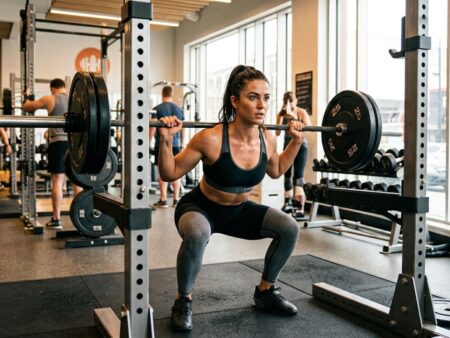
Functional hypertrophy training leans heavily on compound exercises rather than isolation work. Movements like squats, deadlifts, presses, rows, and pull ups involve multiple joints and muscle groups working together. These movements mimic the way the body actually moves in daily life and sport, which is why they are considered more “functional” than something like a leg extension or a cable fly.
Isolation exercises are not eliminated completely. They are simply used as a secondary tool to bring up lagging muscle groups after the main compound lifts are done.
Moderate to Heavy Loads With Hypertrophy Rep Ranges
Rather than training purely for a one rep max like a powerlifter, or purely for a high rep pump like a bodybuilder, functional hypertrophy training typically works in the six to twelve rep range with weights that are challenging but allow good form. This range is well supported by research as being effective for muscle growth while still building meaningful strength.
Focus on Movement Quality and Control
Because the goal includes function, not just size, form and control matter a great deal. Exercises are performed through a full range of motion, with attention paid to posture, joint alignment, and stability. This reduces injury risk and ensures the muscle being trained is actually doing the work, rather than momentum or other muscles compensating.
Training Multiple Planes of Movement
The human body does not only move forward and backward. It also moves side to side and rotationally. Functional hypertrophy training often incorporates lateral movements, rotational core work, and unilateral exercises such as single leg or single arm movements to build strength and muscle in a way that carries over to real world movement patterns and sports.
Balanced Muscle Development
This style of training also pays close attention to muscle balance, particularly between opposing muscle groups such as the chest and upper back, or the quadriceps and hamstrings. Balanced development helps prevent the postural issues and injuries that can come from training only the “mirror muscles.”
How Functional Hypertrophy Training Differs From Other Styles
It can help to compare functional hypertrophy training directly against other common training styles to see where it fits.
| Training Style | Primary Goal | Typical Rep Range | Exercise Selection | Focus on Movement Quality |
|---|---|---|---|---|
| Traditional Bodybuilding | Muscle size and aesthetics | 8 to 15+ reps | Mix of compound and isolation | Moderate |
| Powerlifting | Maximal strength in three lifts | 1 to 5 reps | Squat, bench, deadlift focus | High for competition lifts only |
| Functional Training (Classic) | Movement quality, balance, mobility | Varies, often lighter loads | Bodyweight, cables, stability tools | Very high |
| Functional Hypertrophy Training | Muscle growth plus real world strength and movement | 6 to 12 reps | Mostly compound, some isolation | High |
This comparison shows why functional hypertrophy training appeals to such a wide range of people. It borrows the muscle building effectiveness of bodybuilding, some of the heavier loading philosophy of strength training, and the movement awareness of functional training.
Benefits of Functional Hypertrophy Training
There are several reasons someone might choose this training style over a more traditional approach.
- Builds muscle while also improving strength that carries over into daily activities and sports
- Reduces the risk of injury by emphasizing proper movement mechanics and joint stability
- Improves balance and coordination through multi directional and unilateral training
- Supports better posture by addressing muscle imbalances directly
- Provides a more time efficient workout since compound movements train multiple muscles at once
- Works well for both gym and home training since it relies on foundational movement patterns rather than specialized equipment
Who Should Consider Functional Hypertrophy Training
This style of training can benefit a wide range of people, but it tends to be especially useful for a few groups.
Everyday Gym Goers Who Want More Than Just Size
Someone who lifts primarily to look better but also wants to feel strong and capable in daily life is a great candidate for this approach. It offers the muscle building benefits of a typical hypertrophy program without neglecting real world strength.
Athletes and Recreational Sports Players
Athletes need muscle, but they also need mobility, coordination, and strength that transfers directly to their sport. Functional hypertrophy training supports this by combining compound lifting with multi planar and unilateral movement.
People Returning From Injury or Focused on Longevity
Because this training style places heavy emphasis on control, stability, and proper mechanics, it can be a smart option for people who are rebuilding strength after an injury or who simply want a sustainable training approach for the long term.
Home Gym Trainees
People training at home, often with limited equipment like dumbbells, resistance bands, or a barbell setup, can still apply functional hypertrophy principles effectively. Since the method relies on foundational compound movements rather than machines, it translates well to home workouts.
Sample Weekly Approach to Functional Hypertrophy Training
While programs can vary widely based on goals and equipment, a general weekly structure might look like the one below. This is meant as an example rather than a rigid plan.
- Day One: Lower Body Strength and Hypertrophy – Squat variation, single leg movement such as a split squat, hip hinge movement, core stability work
- Day Two: Upper Body Push and Pull – Bench or overhead press variation, row variation, rotational core work, shoulder stability exercise
- Day Three: Rest or Light Mobility Work
- Day Four: Full Body Functional Strength – Deadlift variation, lunge pattern, pulling movement, carry exercise such as a farmer’s carry
- Day Five: Upper Body Hypertrophy Focus – Press variation, row variation, isolation work for arms and shoulders
- Day Six: Optional Conditioning or Mobility Session
- Day Seven: Rest
Exercises like farmer’s carries, single leg movements, and rotational core training are included specifically because they build strength in ways that translate directly to real world tasks and athletic movement, not just muscle size on their own.
Common Mistakes to Avoid
Even with a solid understanding of the principles, it is easy to make mistakes when applying this style of training.
- Choosing weights so heavy that form breaks down, which increases injury risk and reduces the functional benefit of the movement
- Neglecting single limb or rotational training entirely and only performing traditional bilateral lifts
- Ignoring mobility and recovery, which are essential for maintaining movement quality over time
- Ignoring smaller stabilizer muscles that support joint health, especially around the shoulders, hips, and core
- Programming too many exercises per session instead of prioritizing quality compound movements
Nutrition and Recovery Considerations
Muscle growth, regardless of training style, depends heavily on recovery and nutrition. Adequate protein intake supports muscle repair and growth, while overall calorie intake should align with whether the goal is muscle gain, maintenance, or fat loss alongside muscle building. Sleep quality and stress management also play a significant role, since the nervous system needs recovery time to support both strength and coordination gains that functional hypertrophy training aims to build.
Final Thoughts
Functional hypertrophy training offers a practical middle ground for people who want to build muscle without sacrificing real world strength, mobility, or movement quality. By combining compound lifts, hypertrophy focused rep ranges, and attention to movement mechanics across multiple planes, this approach helps build a body that not only looks strong but performs well in daily life, sports, and long term training longevity.
Whether training in a fully equipped gym or working with a simple set of dumbbells at home, the principles behind functional hypertrophy training can be applied by almost anyone looking for a smarter, more well rounded approach to building muscle.
Disclaimer: The information provided on this website is for educational and informational purposes only and is not intended as medical advice. Always consult a qualified healthcare professional before starting any exercise program, changing your diet, or using supplements.