We’re reader-supported. This means when you buy through links on our site, we may earn an affiliate commission.
Strong, well-developed legs are the foundation of any serious fitness journey. Whether someone is training in a fully equipped gym or grinding through sessions at home, the legs represent the largest muscle group in the body and deserve the most focused, strategic approach.
Building powerful legs improves athletic performance, boosts metabolism, enhances posture, and creates the kind of balanced physique that turns heads. The question most gym-goers and home fitness enthusiasts ask is simple: what is the most effective leg workout?
The answer depends on goals, experience level, and available equipment, but the science and experience of bodybuilders, powerlifters, and strength coaches consistently point to a set of principles and exercises that deliver the best results. This article breaks down everything needed to build a leg day routine that actually works.
Understanding the Muscles of the Legs
Before diving into exercises and programming, it helps to understand the key muscle groups that make up the lower body. A truly effective leg workout targets all of them.
The Quadriceps
The quads are the four muscles that run along the front of the thigh. They are responsible for extending the knee and play a major role in squatting, lunging, and jumping movements. Building strong quads gives the legs that full, dense look from the front.
The Hamstrings
Running along the back of the thigh, the hamstrings are responsible for knee flexion and hip extension. They are often undertrained compared to the quads, which can create muscle imbalances and increase injury risk. Any effective leg workout must give the hamstrings proper attention.
The Glutes
The gluteus maximus, medius, and minimus are the powerhouse muscles of the hips. Strong glutes improve everything from squatting strength to running speed. They also contribute significantly to the aesthetic shape of the lower body.
The Calves
The gastrocnemius and soleus make up the calves. While often treated as an afterthought, well-developed calves complete the look of strong legs and contribute to overall lower body stability and athletic function.
The Adductors and Abductors
These inner and outer thigh muscles stabilize the hips and knees during movement. Including exercises that target them rounds out a comprehensive leg training program.
The Core Principles of an Effective Leg Workout
Building an effective leg workout is not just about picking the right exercises. It requires applying smart training principles that maximize muscle growth and strength gains over time.
- Progressive overload: Gradually increasing weight, reps, or intensity over time forces the muscles to adapt and grow stronger.
- Full range of motion: Going through a complete range of movement on every rep recruits more muscle fibers and leads to better development.
- Mind-muscle connection: Consciously squeezing and feeling the target muscle during each exercise improves activation and results.
- Adequate volume: Research consistently supports performing enough sets and reps per muscle group per week to stimulate hypertrophy.
- Proper rest: Muscles grow during recovery, not during the workout itself. Allowing 48 to 72 hours between heavy leg sessions is essential.
- Nutrition to support training: Protein intake and overall caloric balance directly influence how well the body responds to leg training.
The Most Effective Leg Exercises
Barbell Back Squat
No single exercise has earned more respect in the strength and bodybuilding world than the barbell back squat. It activates the quads, hamstrings, glutes, and core simultaneously, making it the most efficient compound movement for lower body development. The squat also triggers a significant hormonal response, including the release of testosterone and growth hormone, which supports muscle building across the entire body.
Proper squat technique involves keeping the chest tall, pushing the knees out in line with the toes, and descending until the thighs are at least parallel to the floor. For those without access to a barbell, the goblet squat using a dumbbell or kettlebell is an excellent alternative.
Romanian Deadlift
The Romanian deadlift (RDL) is one of the best exercises for the hamstrings and glutes. Unlike the conventional deadlift, the RDL keeps the legs relatively straight and emphasizes the hip hinge pattern, creating a deep stretch in the hamstrings at the bottom of the movement. This stretch under load is one of the most effective ways to build hamstring size and strength.
A controlled tempo on the way down, holding the stretch for a moment before driving the hips forward to return to standing, maximizes the effectiveness of this movement.
Leg Press
The leg press is a machine-based exercise that allows trainees to load the quadriceps, hamstrings, and glutes with heavy weight while reducing spinal stress. It is particularly effective for bodybuilders looking to push high volumes of leg training without the same fatigue demands as barbell squats.
Foot placement on the leg press affects muscle emphasis. A higher foot placement targets the glutes and hamstrings more, while a lower placement shifts the focus to the quads.
Walking Lunges
Walking lunges develop unilateral leg strength, which means each leg works independently. This helps correct muscle imbalances between the left and right sides of the body. They target the quads, glutes, and hamstrings simultaneously and also challenge balance and coordination.
Adding dumbbells or a barbell to walking lunges increases the challenge as strength improves.
Leg Curl
The lying or seated leg curl machine isolates the hamstrings in a way that compound movements cannot fully replicate. Since the hamstrings cross both the hip and knee joint, training them through knee flexion with leg curls ensures complete development of the muscle group.
For home trainees without access to a machine, Nordic hamstring curls performed with feet anchored under a sofa or heavy furniture are a highly effective alternative.
Leg Extension
The leg extension machine isolates the quadriceps through knee extension. While compound movements should form the backbone of any leg program, the leg extension is a valuable tool for finishing off the quads and ensuring complete development of all four quad muscles, particularly the vastus medialis (the teardrop-shaped muscle above the knee).
Calf Raises
Standing and seated calf raises target the gastrocnemius and soleus respectively. Since calves are composed primarily of slow-twitch muscle fibers, they respond best to higher repetition ranges and frequent training. Standing calf raises with a full stretch at the bottom and a deliberate pause at the top are the most effective approach.
A Sample Effective Leg Workout
The following workout is designed to cover all the major muscle groups of the lower body with a combination of compound and isolation exercises. It is suitable for intermediate to advanced gym-goers training with barbells and machines.
| Exercise | Sets | Reps | Rest |
|---|---|---|---|
| Barbell Back Squat | 4 | 6 to 8 | 2 to 3 minutes |
| Romanian Deadlift | 3 | 8 to 10 | 2 minutes |
| Leg Press | 3 | 10 to 12 | 90 seconds |
| Walking Lunges | 3 | 12 per leg | 90 seconds |
| Leg Curl | 3 | 10 to 12 | 60 seconds |
| Leg Extension | 3 | 12 to 15 | 60 seconds |
| Standing Calf Raise | 4 | 15 to 20 | 60 seconds |
This session should be performed once or twice per week with adequate recovery time between sessions.
Effective Home Leg Workout (No Equipment)
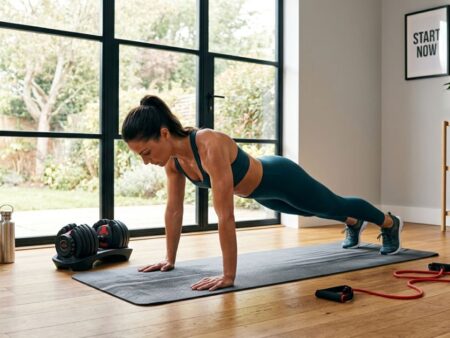
Not everyone has access to a commercial gym, and a highly effective leg workout can still be achieved at home using bodyweight and minimal equipment. The key is progressive overload through technique modifications and volume increases.
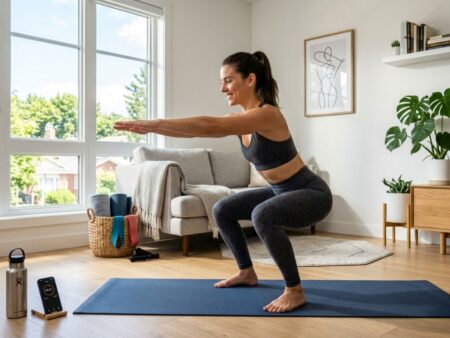
- Bodyweight squat: Master the movement pattern with full depth and controlled tempo.
- Bulgarian split squat: Elevate the rear foot on a chair or sofa to increase the range of motion and intensity.
- Single-leg Romanian deadlift: Challenges the hamstrings and glutes while improving balance.
- Glute bridge and hip thrust: Targets the glutes and hamstrings effectively without equipment.
- Lateral lunge: Activates the adductors and abductors in addition to the quads and glutes.
- Nordic hamstring curl: One of the most effective hamstring exercises, requiring only an anchored surface for the feet.
- Calf raise: Performed on the edge of a step to maximize the range of motion.
As strength increases, home trainees can add resistance bands, weighted backpacks, or dumbbells to continue progressing.
Common Leg Training Mistakes to Avoid
Even experienced gym-goers fall into habits that limit their leg development. Being aware of these mistakes makes a significant difference in results.
- Skipping leg day: It sounds cliche, but inconsistency is the number one reason legs fail to develop. Legs must be trained regularly and with the same intensity given to upper body sessions.
- Not squatting deep enough: Partial squats dramatically reduce the muscle activation of the quads and glutes. Full depth squats are far more effective.
- Neglecting the hamstrings: Many people overtrain the quads and underprioritize the hamstrings, leading to imbalances that increase injury risk.
- Going too heavy too soon: Ego-driven loading with poor form is a direct path to injury. Building a strong foundation with controlled technique first allows heavier loading safely over time.
- Ignoring calf training: Calves require dedicated, high-volume training to develop. Tacking on a few quick sets at the end of a session rarely produces meaningful results.
- Inadequate warm-up: Cold muscles and stiff joints perform poorly and are more prone to injury. Spending five to ten minutes warming up with light cardio, dynamic stretching, and mobility work prepares the legs for maximum effort.
How to Structure Leg Training in a Weekly Program
How leg workouts fit into the overall training week matters as much as the exercises themselves. The structure depends on training frequency and goals.
For Beginners
Beginners benefit most from full-body training three times per week. Each session should include one or two lower body exercises, focusing on learning proper squat and hinge patterns before adding significant load.
For Intermediate Trainees
An upper/lower training split performed four days per week is highly effective. Lower body sessions are trained twice weekly, allowing enough volume for growth and enough recovery to perform at a high level each session.
For Advanced Trainees and Bodybuilders
More advanced practitioners often use a push/pull/legs split or a dedicated legs day within a higher frequency program. Some competitive bodybuilders train legs twice or even three times per week, dividing volume between quad-focused and hamstring/glute-focused sessions.
The Role of Nutrition in Leg Development
Training hard in the gym is only half the equation. Without proper nutrition, even the most effective leg workout will fail to produce maximum results.
- Protein intake: Consuming 1.6 to 2.2 grams of protein per kilogram of bodyweight per day supports muscle repair and growth.
- Carbohydrates: Carbs fuel intense training sessions. Eating a carbohydrate-rich meal before a heavy leg workout improves performance and endurance.
- Caloric surplus for muscle gain: Building muscle requires eating slightly above maintenance calories, providing the energy and raw materials for growth.
- Post-workout nutrition: Consuming a combination of protein and carbohydrates within a few hours after training supports recovery and muscle protein synthesis.
- Hydration: Muscles function poorly when dehydrated. Staying well hydrated throughout the day and during training sessions improves performance and recovery.
Final Thoughts
The most effective leg workout is one that is consistently performed, progressively loaded, and intelligently structured. It combines foundational compound movements like the squat and Romanian deadlift with targeted isolation exercises to ensure complete development of every major muscle group.
Whether training in a world-class gym or a spare bedroom, the principles remain the same: train hard, train smart, recover well, and eat to support the work being done. Legs that are built with dedication and the right approach do not just look impressive, they perform at a level that carries over into every aspect of athletic and daily life.
Disclaimer: The information provided on this website is for educational and informational purposes only and is not intended as medical advice. Always consult a qualified healthcare professional before starting any exercise program, changing your diet, or using supplements.