We’re reader-supported. This means when you buy through links on our site, we may earn an affiliate commission.
Bodybuilding and fat loss might seem like two separate goals that rarely overlap, but the fitness world has long debated whether lifting weights and building muscle is an effective strategy for shedding unwanted body fat.
The short answer is yes — bodybuilding is not only good for fat loss, it is one of the most effective long-term strategies available.
Whether someone is training at a commercial gym, a home setup, or a dedicated bodybuilding facility, understanding how resistance training and muscle building influence fat metabolism can completely transform their approach to getting lean.
How Bodybuilding Supports Fat Loss
The Role of Muscle in Burning Fat
One of the most compelling reasons bodybuilding is effective for fat loss comes down to a concept known as resting metabolic rate (RMR). Muscle tissue is metabolically active, meaning it burns calories even at rest. The more lean muscle mass a person carries, the more calories their body burns throughout the day — even while sitting, sleeping, or watching television.
Fat tissue, by contrast, is largely metabolically inactive. When someone replaces fat with muscle through consistent resistance training, they effectively upgrade their body’s fat-burning engine. Studies have consistently shown that each pound of muscle burns significantly more calories per day compared to fat tissue. Over weeks and months, this difference compounds into meaningful fat loss, even without dramatic changes to diet.
Excess Post-Exercise Oxygen Consumption (EPOC)
Bodybuilding-style workouts trigger a phenomenon called Excess Post-Exercise Oxygen Consumption, commonly referred to as EPOC or the “afterburn effect.” After an intense resistance training session, the body continues to consume elevated levels of oxygen and burn additional calories for hours — sometimes up to 24 to 48 hours — post-workout.
This is in contrast to steady-state cardio, which burns calories primarily during the session itself. When a person finishes a run, their metabolism returns to baseline relatively quickly. After a heavy leg day or a full-body strength session, however, the body remains in an elevated metabolic state as it works to repair muscle fibers, replenish glycogen stores, and restore hormonal balance.
Hormonal Benefits of Resistance Training
Bodybuilding training also has a powerful hormonal effect that supports fat loss. Resistance training increases the production of testosterone and growth hormone — two key hormones involved in fat metabolism and muscle building. These hormones signal the body to mobilise fat stores for energy and to preserve or build lean muscle tissue.
Additionally, intense weightlifting improves insulin sensitivity. When cells become more responsive to insulin, the body is better at shuttling carbohydrates into muscle tissue for energy rather than storing them as fat. This hormonal environment makes the body far more efficient at using fuel and less likely to accumulate excess body fat.
Bodybuilding vs. Cardio for Fat Loss
A common question among gym-goers is whether they should prioritise cardio or weights for fat loss. The answer is nuanced, but the evidence increasingly supports resistance training as the superior long-term fat loss strategy.
| Factor | Bodybuilding / Resistance Training | Traditional Cardio |
|---|---|---|
| Calories burned during session | Moderate | High |
| Calories burned after session (EPOC) | High (up to 48 hours) | Low |
| Effect on resting metabolic rate | Increases over time | Minimal to no increase |
| Muscle preservation | High | Low to moderate |
| Body composition improvement | Significant | Limited |
| Long-term fat loss sustainability | High | Moderate |
| Bone density benefits | High | Moderate |
As the table illustrates, cardio may burn more calories in a single session, but bodybuilding training offers compounding benefits through muscle building, elevated metabolism, and prolonged calorie burn. The ideal approach for most people is a combination of both, but for those who must choose, resistance training provides a stronger foundation for sustained fat loss.
What Bodybuilding Fat Loss Actually Looks Like
Body Recomposition
An important concept for anyone interested in using bodybuilding for fat loss is body recomposition — the simultaneous process of losing fat and gaining muscle. This is most achievable for beginners, those returning after a break, or individuals with higher body fat percentages.
Body recomposition means a person may not see dramatic drops on the scale, but their body will visibly change. Clothes will fit differently, muscle definition will increase, and energy levels will improve. The scale can be misleading in this context because muscle is denser than fat — a person can look significantly leaner while weighing the same or even slightly more.
Caloric Deficit Combined with Training
For fat loss to occur, the body ultimately needs to be in a caloric deficit — consuming fewer calories than it expends. Bodybuilding makes this process more effective in two key ways:
- It increases total daily energy expenditure, making the deficit easier to achieve
- It preserves lean muscle mass during the deficit, ensuring the weight lost comes from fat rather than muscle
Without resistance training, a caloric deficit often results in the loss of both fat and muscle, leaving the person lighter but with a soft, undefined physique and a slower metabolism. Bodybuilding protects against this outcome.
Progressive Overload and Continued Fat Loss
Progressive overload — the practice of gradually increasing the weight, reps, or intensity of training over time — is the backbone of bodybuilding. It is also a key driver of ongoing fat loss. As the body adapts to heavier loads and more demanding workouts, it continues to burn more calories, build more muscle, and improve metabolic efficiency.
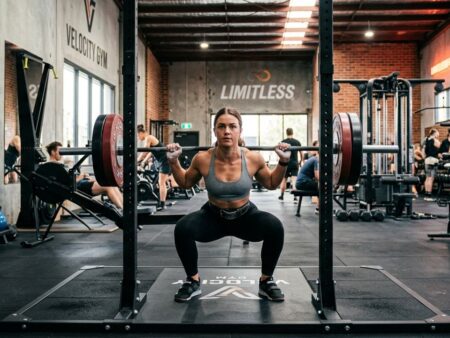
Someone who consistently adds weight to their squat, bench press, or deadlift over months will experience continued improvements in body composition, whereas someone doing the same cardio routine at the same intensity often hits a plateau.
Effective Bodybuilding Strategies for Fat Loss
Compound Movements First
Compound exercises recruit multiple muscle groups simultaneously, burning more calories and stimulating greater hormonal responses than isolation movements. Those training for fat loss should prioritise:
- Squats and deadlifts for lower body and full-body activation
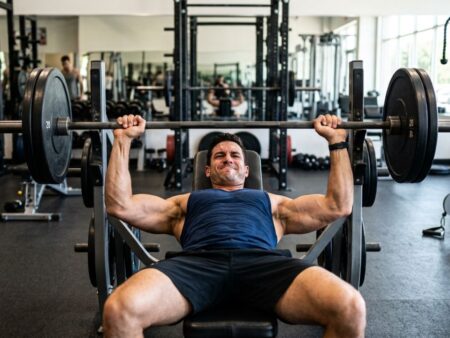
- Bench press and overhead press for upper body pushing strength
- Barbell and dumbbell rows for back thickness and pulling strength
- Pull-ups and dips for bodyweight compound upper body work
- Romanian deadlifts and hip thrusts for posterior chain development
These movements form the foundation of any effective fat loss bodybuilding programme.
Training Volume and Frequency
For fat loss, training frequency matters. Research supports training each muscle group at least twice per week to maximise muscle protein synthesis and maintain lean mass during a caloric deficit. A well-structured programme might look like:
- Upper/lower splits four days per week
- Push/pull/legs rotations across five to six days per week
- Full-body training three days per week for beginners or those with limited time
Higher training volume — more total sets and reps — also tends to produce greater EPOC and calorie burn, making it a valuable tool during a fat loss phase.
Incorporating Metabolic Training
Many bodybuilders use metabolic training techniques to accelerate fat loss without sacrificing muscle. These methods include:
- Supersets: Pairing two exercises back-to-back with minimal rest, keeping heart rate elevated and increasing calorie burn
- Drop sets: Reducing the weight after reaching failure and continuing the set, extending time under tension and metabolic demand
- Giant sets: Performing three or more exercises consecutively, creating a conditioning effect alongside muscle stimulation
- Circuit training: Rotating through a series of resistance exercises with short rest periods for cardiovascular and muscular benefits
These techniques can be incorporated strategically into a standard bodybuilding programme, particularly during a fat loss phase.
Rest Periods and Calorie Burn
Shorter rest periods between sets (60 to 90 seconds) keep heart rate elevated and increase the cardiovascular demand of a session, leading to greater calorie expenditure compared to longer rest periods of three minutes or more. While longer rest periods are often necessary for maximal strength work, those focused on fat loss can benefit from moderating rest times where appropriate.
Nutrition for Bodybuilding-Focused Fat Loss
Training is only part of the equation. Nutrition must support the goal of fat loss while preserving the muscle being built in the gym.
Protein as the Priority
Adequate protein intake is non-negotiable for anyone using bodybuilding to lose fat. Protein:
- Supports muscle repair and growth after training
- Has the highest thermic effect of any macronutrient, meaning the body burns more calories digesting it
- Keeps hunger in check by promoting satiety
- Prevents muscle breakdown during a caloric deficit
Most fitness professionals and sports nutritionists recommend consuming between 1.6 and 2.2 grams of protein per kilogram of body weight daily for those in a fat loss phase. Spreading this intake across four to five meals or protein-rich snacks throughout the day optimises muscle protein synthesis.
Carbohydrates and Fat Timing
Carbohydrates fuel intense training sessions and support recovery. Rather than eliminating them entirely, those focused on fat loss through bodybuilding are better served by timing carbohydrate intake around workouts — consuming the bulk of carbs before and after training sessions. This approach fuels performance and recovery while reducing the likelihood of excess carbs being stored as fat during sedentary periods.
Healthy fats from sources like avocado, nuts, olive oil, and fatty fish support hormone production, joint health, and overall wellbeing. They should not be dramatically restricted, as doing so can negatively affect testosterone levels and recovery.
Common Mistakes to Avoid
Even with the best intentions, certain mistakes can undermine fat loss progress in bodybuilding:
- Eating back all exercise calories: Overestimating how many calories are burned during training and rewarding workouts with excessive food intake can erase the caloric deficit
- Neglecting sleep: Growth hormone is primarily secreted during deep sleep, and inadequate rest impairs recovery, muscle building, and fat loss
- Skipping leg training: The legs contain the largest muscle groups in the body; training them has a disproportionately large effect on metabolism and total calorie burn
- Relying solely on the scale: Body weight fluctuates daily due to water retention, glycogen levels, and muscle gain; progress photos, measurements, and performance improvements are more reliable indicators
- Training without a plan: Random workouts lack progressive overload and fail to optimise either muscle building or fat loss over time
Home Gym vs. Commercial Gym for Bodybuilding Fat Loss
The good news for those training at home is that effective bodybuilding for fat loss does not require a fully equipped gym. A set of adjustable dumbbells, a barbell, resistance bands, and a pull-up bar can deliver excellent results when used with consistency and progressive overload. Bodyweight training — press-ups, dips, squats, lunges, and pull-ups — can also build meaningful muscle when taken to or near muscular failure.
Commercial gyms offer more equipment variety, which can be useful for targeting specific muscle groups, adding training variety, and scaling progressive overload more easily. However, the fundamental principles of bodybuilding for fat loss remain the same regardless of environment: train hard, eat enough protein, maintain a moderate caloric deficit, and prioritise recovery.
The Long-Term View
Perhaps the greatest advantage of using bodybuilding as a fat loss strategy is its sustainability. Unlike crash diets or excessive cardio programmes that strip away muscle and leave the metabolism slower than before, bodybuilding builds a leaner, more metabolically resilient body over time. Each kilogram of muscle added makes future fat loss easier, and the strength and physique improvements provide ongoing motivation to continue training.
For anyone committed to long-term body transformation — whether their starting point is a beginner lifter or an experienced gym-goer — bodybuilding stands out as one of the most powerful, evidence-backed tools available for losing fat, reshaping the body, and maintaining those results for life.
Disclaimer: The information provided on this website is for educational and informational purposes only and is not intended as medical advice. Always consult a qualified healthcare professional before starting any exercise program, changing your diet, or using supplements.