HIIT vs LISS Cardio: Which Burns More Fat?

The debate between High-Intensity Interval Training (HIIT) and Low-Intensity Steady State (LISS) cardio has captivated fitness enthusiasts for years. Both methods promise fat loss, improved cardiovascular health, and better overall fitness, but they approach these goals from completely different angles.
Understanding which type of cardio burns more fat requires looking beyond simple calorie counts and examining how each affects the body’s metabolic processes, recovery needs, and long-term sustainability.
Understanding HIIT: The High-Octane Approach
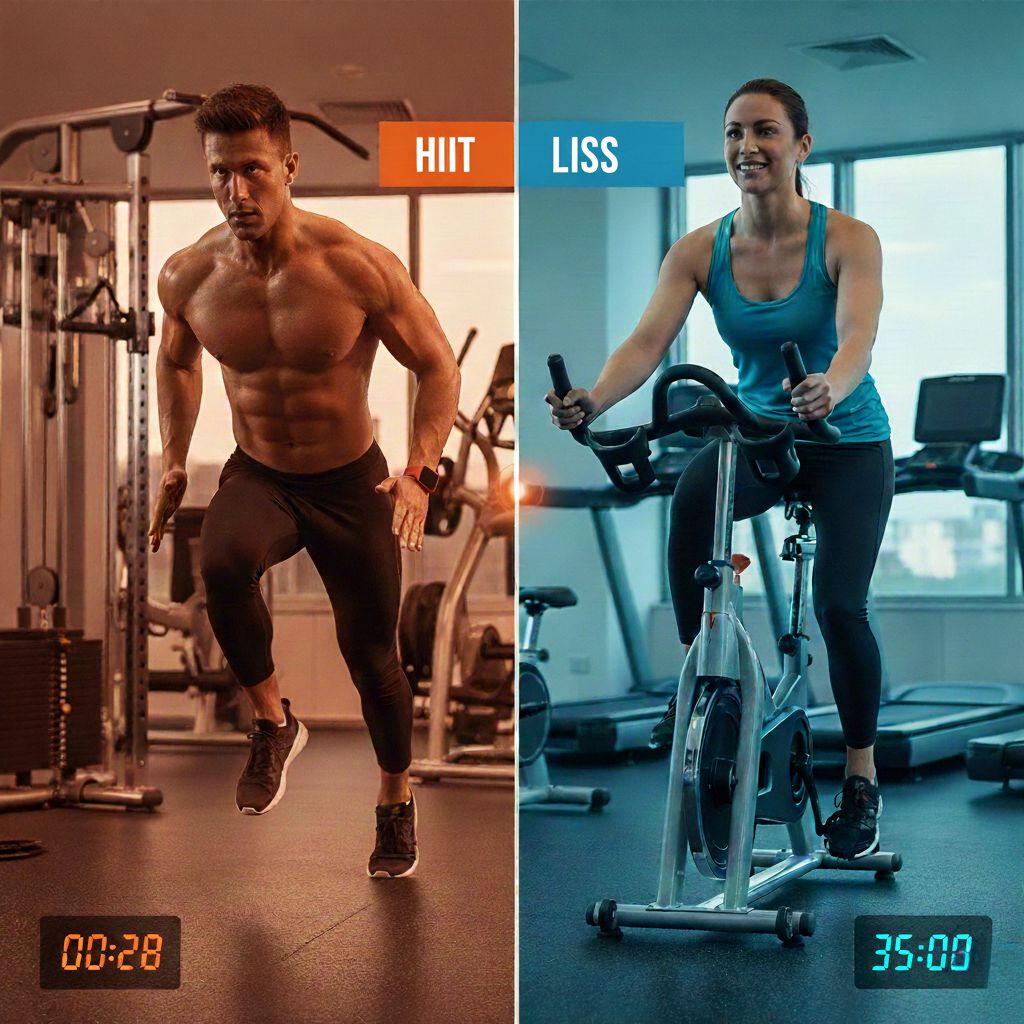
High-Intensity Interval Training involves short bursts of maximum or near-maximum effort followed by brief recovery periods. A typical HIIT session might last anywhere from 10 to 30 minutes, making it an attractive option for those with busy schedules. During these intense intervals, exercisers push their heart rate to 80-95% of their maximum capacity, engaging multiple muscle groups and demanding significant energy expenditure in a compressed timeframe.
What makes HIIT particularly interesting from a fat-burning perspective is the afterburn effect, scientifically known as Excess Post-Exercise Oxygen Consumption (EPOC). After a HIIT workout, the body continues burning calories at an elevated rate for hours as it works to restore oxygen levels, repair muscle tissue, and return to its normal metabolic state. This post-workout calorie burn can add a significant bonus to the calories burned during the actual exercise session.
60-Day Money-Back Guarantee
Cancel anytime, no commitments
60-Day Money-Back Guarantee
Cancel anytime, no commitments
60-Day Money-Back Guarantee
Cancel anytime, no commitments
Benefits of HIIT for Fat Loss
- Time Efficiency: HIIT delivers substantial calorie burn in shorter workout windows, perfect for people juggling work, family, and fitness goals.
- Metabolic Boost: The intense nature of HIIT can elevate metabolism for up to 24 hours post-workout, creating additional fat-burning opportunities throughout the day.
- Muscle Preservation: Unlike some forms of cardio, HIIT helps maintain lean muscle mass while burning fat, which is crucial for a toned appearance and sustained metabolic rate.
- Cardiovascular Improvements: HIIT rapidly improves cardiovascular fitness, increasing VO2 max and heart health markers in relatively short training periods.
- Variety and Engagement: The varied nature of HIIT workouts keeps things interesting and can prevent the mental burnout that sometimes accompanies repetitive exercise routines.
Exploring LISS: The Steady and Sustainable Method
Low-Intensity Steady State cardio takes a completely different approach to fat burning. LISS involves maintaining a consistent, moderate pace for extended periods, typically 30 to 60 minutes or longer. Think of activities like brisk walking, light jogging, cycling at a comfortable pace, or swimming laps without pushing to exhaustion. During LISS, exercisers maintain their heart rate at roughly 50-65% of their maximum capacity, a zone where the body can comfortably sustain activity while holding a conversation.
The magic of LISS lies in its relationship with fat oxidation. At lower exercise intensities, the body primarily uses fat as its fuel source rather than relying heavily on glycogen stores. While LISS burns fewer total calories per minute compared to HIIT, a larger percentage of those calories comes directly from fat. Additionally, the lower intensity means less stress on the body, allowing for more frequent training sessions and better recovery between workouts.
Benefits of LISS for Fat Loss
- Direct Fat Utilization: Lower intensity exercise taps into fat stores as the primary fuel source, making it efficient for targeting stubborn body fat.
- Recovery Friendly: LISS places minimal stress on muscles and joints, allowing for daily sessions without overtaxing the body or interfering with strength training recovery.
- Accessibility: Almost anyone can perform LISS cardio regardless of fitness level, making it an inclusive option for beginners, older adults, or those recovering from injury.
- Mental Health Benefits: The meditative quality of steady-state cardio can reduce stress and improve mental clarity, providing psychological benefits alongside physical ones.
- Sustainable Long-Term: The low impact nature makes LISS easier to maintain consistently over months and years without burnout or injury.
The Calorie Burn Comparison
When comparing HIIT and LISS purely on calorie expenditure, the picture becomes nuanced. During the actual workout, HIIT typically burns more calories per minute due to its explosive intensity. A 20-minute HIIT session might burn 250-400 calories depending on the individual’s weight, fitness level, and workout intensity. However, when factoring in EPOC, that number can increase by an additional 50-100 calories over the following hours.
LISS burns fewer calories per minute but can accumulate significant totals over longer durations. A 45-minute brisk walk might burn 200-300 calories, while an hour-long session could reach 350-450 calories. The key difference is that LISS calorie burn happens almost entirely during the activity itself, with minimal afterburn effect.
| Factor | HIIT | LISS |
|---|---|---|
| Duration | 10-30 minutes | 30-60+ minutes |
| Intensity | 80-95% max heart rate | 50-65% max heart rate |
| Calories per minute | Higher (12-20 cal/min) | Lower (5-8 cal/min) |
| Afterburn effect | Significant (up to 24 hours) | Minimal |
| Primary fuel source | Glycogen and fat | Primarily fat |
| Recovery time needed | 24-48 hours | Minimal (can do daily) |
| Impact on joints | Higher | Lower |
Which Actually Burns More Fat?
The answer to which cardio method burns more fat depends largely on individual circumstances, goals, and lifestyle factors. From a purely scientific standpoint, HIIT tends to create a larger total calorie deficit when accounting for both the workout and the afterburn effect. This means that over the course of a week, someone doing three 20-minute HIIT sessions might burn as many or more total calories than someone doing five 45-minute LISS sessions.
However, fat loss is not just about raw calorie burn. It is about creating a sustainable caloric deficit over time while preserving lean muscle mass and maintaining overall health. LISS offers advantages in terms of frequency and recovery, allowing individuals to accumulate more total weekly activity without overtaxing their system. For someone who enjoys working out six days per week, LISS might ultimately lead to greater fat loss simply because it allows for more consistent activity.
Factors That Influence Fat Burning Effectiveness
- Current Fitness Level: Beginners might find LISS more accessible and sustainable, while advanced athletes can maximize HIIT benefits without excessive fatigue.
- Time Availability: Those with limited workout windows benefit more from HIIT’s efficiency, while people with flexible schedules can capitalize on LISS’s volume.
- Recovery Capacity: Individuals with demanding strength training programs might need LISS to avoid overtraining, while those focused primarily on cardio can handle more HIIT.
- Injury History: People with joint issues or previous injuries often tolerate LISS better than the explosive movements required in HIIT.
- Dietary Habits: The effectiveness of either method dramatically increases when paired with proper nutrition and a consistent caloric deficit.
The Hybrid Approach: Best of Both Worlds
Rather than choosing one method exclusively, many fitness professionals advocate for incorporating both HIIT and LISS into a comprehensive training program. This hybrid approach leverages the unique benefits of each method while minimizing their respective drawbacks. A balanced weekly routine might include two HIIT sessions for metabolic boost and cardiovascular improvements, paired with three to four LISS sessions for additional calorie burn and active recovery.
This combined strategy allows exercisers to push hard during HIIT workouts without overtaxing their recovery systems, while LISS sessions accumulate additional calorie expenditure without interfering with muscle recovery. The variety also helps prevent mental burnout and keeps workouts engaging over the long term. Someone following this approach might do sprint intervals on Monday, a long walk on Tuesday, heavy resistance training on Wednesday, cycling at a moderate pace on Thursday, another HIIT session on Friday, and weekend activities that incorporate both gentle movement and occasional bursts of intensity.
Practical Implementation Strategies
Successfully implementing either cardio method requires more than just understanding the theory. It demands practical strategies that fit into real life with its competing demands and unpredictable schedules. For HIIT, starting conservatively is crucial. New practitioners should begin with shorter work intervals and longer rest periods, perhaps 20 seconds of work followed by 40 seconds of rest, gradually progressing to more challenging ratios as fitness improves. Quality always trumps quantity with HIIT, so maintaining proper form and truly maximal effort during work intervals matters more than extending session length.
LISS implementation focuses on consistency and gradual progression. Starting with shorter sessions and comfortable paces allows the body to adapt without overwhelming fatigue. As fitness improves, exercisers can extend duration, increase pace slightly, or add variety through different activities. The key is keeping intensity in the sweet spot where conversation remains possible but requires effort, a zone that maximizes fat oxidation while remaining sustainable for extended periods.
Sample Weekly Schedule Combining Both Methods
- Monday: 20-minute HIIT session (sprint intervals, burpees, or cycling sprints)
- Tuesday: 45-minute brisk walk or light jog
- Wednesday: Strength training with 15-minute LISS cooldown
- Thursday: 60-minute moderate-paced cycling or swimming
- Friday: 25-minute HIIT session with compound movements
- Saturday: 90-minute leisurely hike or outdoor activity
- Sunday: Active recovery (yoga, stretching, gentle walk)
Common Mistakes to Avoid
Whether choosing HIIT, LISS, or a combination approach, certain pitfalls can undermine fat loss efforts. With HIIT, the most common error is confusing general intensity with true maximum effort. HIIT requires genuinely pushing to near-maximum capacity during work intervals. If someone can maintain their HIIT pace for 45 minutes, they are not actually doing HIIT but rather moderate-intensity continuous training. Another frequent mistake is doing HIIT too often. The method’s effectiveness depends partly on adequate recovery between sessions. Attempting daily HIIT workouts typically leads to decreased performance, increased injury risk, and eventual burnout.
LISS mistakes often involve either going too easy or pushing too hard. Going too easy transforms the workout into casual activity with minimal training stimulus. Conversely, pushing too hard ventures into moderate or high-intensity territory, which cannot be sustained for the extended durations that make LISS effective. The sweet spot requires honest self-monitoring to maintain that conversation-pace effort level throughout the session. Another common error is using LISS as an excuse to avoid challenging workouts entirely. While LISS has tremendous value, a program consisting solely of easy cardio will eventually plateau and deliver diminishing returns.
The Role of Nutrition in Fat Loss
No discussion of fat burning would be complete without addressing nutrition. Neither HIIT nor LISS can overcome poor dietary habits. Fat loss fundamentally requires a caloric deficit, meaning the body burns more calories than it consumes. Both cardio methods contribute to creating this deficit, but they cannot compensate for excessive caloric intake. A single large restaurant meal can easily contain more calories than an intense hour-long workout burns.
The most effective approach combines whichever cardio method fits best with the individual’s lifestyle alongside a sustainable nutrition strategy emphasizing whole foods, adequate protein, and mindful eating. HIIT may create a larger immediate caloric deficit, but if it leaves someone ravenously hungry and prone to overeating, LISS might prove more effective by allowing better appetite regulation. Similarly, the time saved with HIIT could be invested in meal preparation, potentially yielding greater fat loss results than an extra hour of cardio.
No Needles or Prescriptions
Free delivery on orders over $100
No Needles or Prescriptions
Free delivery on orders over $100
No Needles or Prescriptions
Free delivery on orders over $100
Making the Right Choice for Individual Goals
Ultimately, the best cardio method for burning fat is the one that an individual will actually perform consistently over weeks, months, and years. A theoretically optimal program that someone hates and abandons after three weeks will always underperform a less efficient but sustainable approach maintained for months. Personality, preferences, lifestyle, and individual physiology all play crucial roles in determining which method works best.
Someone who thrives on challenge, enjoys pushing their limits, and has limited time might find HIIT perfectly aligned with their needs and temperament. Conversely, an individual who prefers meditative movement, has more flexible time, or needs to manage stress might discover that LISS feels more natural and sustainable. Neither choice is inherently superior. The key is honest self-assessment followed by consistent implementation.
Both HIIT and LISS offer proven pathways to fat loss, improved health, and enhanced fitness. HIIT delivers maximum results in minimum time through intense effort and metabolic afterburn. LISS provides sustainable fat burning through volume and frequency with minimal recovery demands.
For many people, a combination approach leveraging both methods provides the optimal balance of effectiveness, sustainability, and enjoyment. The real answer to which burns more fat is not about the method itself but about finding the approach that fits seamlessly into an individual’s life, allowing for the consistency that ultimately determines long-term success.
Discover more from Maximize Workouts
Subscribe to get the latest posts sent to your email.